
How Are Windmills Recycled? The Surprising Second Life of Wind Turbines
Wind turbines help produce clean electricity without burning fossil fuels. But there’s a question that doesn’t get nearly as much attention: What happens to wind turbines when they reach the end of their working lives?
After all, nothing lasts forever. Even these giant machines need to be repaired, replaced, or taken down at some point.
The good news? Much of a wind turbine can be recycled. Steel towers can become new metal products, copper wiring can find its way into other electrical systems, and some old blades are being turned into useful materials.
Still, recycling wind turbines isn’t quite as simple as tossing a glass bottle into a recycling bin. Their enormous size, unusual materials, and remote locations create some rather interesting challenges.
So, how are windmills recycled, and what happens to all those parts once the blades stop spinning? Let’s find out.
First, how long does a wind turbine last?
Before looking at recycling, it helps to know how long wind turbines actually work.
Most modern wind turbines are designed for a service life of around 20 to 25 years, though some can keep running for 30 years or longer with proper care and upgrades.
During those years, turbines face strong winds, rain, snow, heat, and sometimes lightning. Offshore turbines have an even tougher job. They’re exposed to saltwater, powerful storms, and constant moisture.
Over time, these conditions wear down mechanical parts and put stress on the blades.
But reaching the end of a turbine’s expected service life doesn’t always mean it’s ready for the scrap heap.
Some wind farms undergo a process called repowering. This involves replacing older turbines with newer, more efficient models. In some cases, operators keep parts of the original infrastructure.
Older turbines may also be refurbished and sold for use elsewhere.
When reuse isn’t practical, recycling becomes the next step.
What exactly is a wind turbine made of?
A wind turbine is a collection of different parts, each made from materials chosen for a specific job.
The main components include:
- Tower: Usually made from steel, although some designs use concrete.
- Blades: Mostly made from fiberglass or carbon fiber composites, combined with resins and sometimes wood or foam cores.
- Nacelle: The housing at the top of the tower that contains key mechanical and electrical equipment.
- Generator: Contains metals such as copper and steel, and sometimes rare-earth magnets.
- Foundation: Typically made from reinforced concrete and steel.
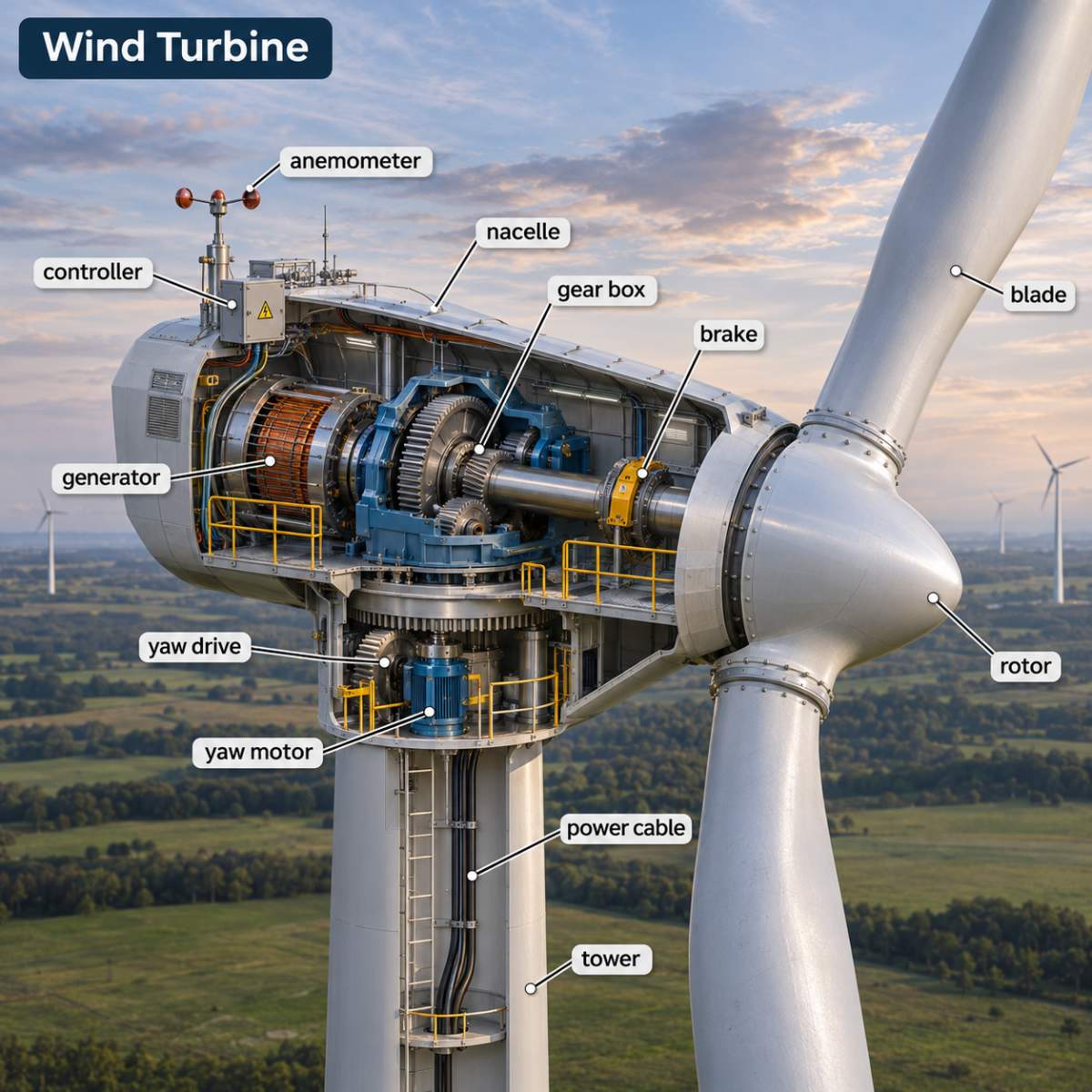
According to the U.S. Department of Energy, about 85% to 90% of a wind turbine’s mass consists of materials that can already be commercially recycled.
That leaves a smaller but stubborn share that’s harder to handle.
The biggest headache? Those enormous blades.
We’ll get to them shortly. First, let’s look at the parts that are easier to recycle.
Recycling the tower is fairly straightforward
Wind turbine towers are huge. Some modern towers reach more than 100 meters above the ground, and their steel sections can weigh many tons.
Fortunately, steel is one of the world’s most widely recycled materials.
When a turbine is retired, workers carefully dismantle the tower, often using large cranes to lower its sections to the ground.
The steel can then be cut into smaller pieces and transported to a recycling facility.
There, it’s sorted, processed, and melted down so it can be used again.
Recycled steel can become construction beams, vehicle parts, machinery, or even components for new wind turbines.
Better still, steel can be recycled repeatedly without losing its basic properties, provided its composition and quality are properly controlled.
Recycling steel also reduces the need to mine and process fresh iron ore. That can save energy and cut greenhouse gas emissions compared with making steel from raw materials.
What happens to the generator and other metal parts?
Inside the nacelle, a wind turbine contains a surprising amount of valuable material.
There’s copper wiring, steel machinery, electrical equipment, and sometimes aluminum components. Certain generators also contain permanent magnets made with rare-earth elements, such as neodymium and dysprosium.
These materials are worth recovering.
Copper is especially useful because it conducts electricity so well. Once recovered and refined, it can be used in new wiring, motors, electronics, and electrical systems.
Steel and aluminum can also enter established recycling streams.
Some mechanical parts may be refurbished instead of melted down. Gearboxes, generators, and other equipment can sometimes be repaired and used again.
Rare-earth magnets are more complicated.
Recovering their valuable elements requires specialized processes, and commercial recycling systems are still developing. However, researchers and manufacturers are working on better ways to recover magnets or the materials inside them.
This matters because mining and refining rare-earth elements can have significant environmental impacts.
Recovering them from old equipment could help reduce demand for newly mined materials.
Why are wind turbine blades so difficult to recycle?
Now we come to the trickiest part of wind turbine recycling.
The blades.
Modern wind turbine blades can stretch more than 80 meters long, with some of the largest offshore models using even longer blades.
They’re designed to be light, strong, and flexible enough to withstand years of changing wind conditions.
To achieve this, manufacturers use composite materials.
Most blades contain fiberglass reinforced with resin. Some also use carbon fiber in areas that need extra strength.
The problem is that these materials are bonded together.
Unlike steel, which can be melted and reshaped, many traditional blade composites contain thermoset resins. Once cured, these resins form a solid structure that doesn’t simply melt when heated.
That makes separating the fibers from the resin difficult.
It’s a bit like trying to pull the flour back out of a baked cake.
You can break the cake apart, of course, but recovering the original ingredients is another matter.
For years, this challenge meant that some retired blades ended up in landfills.
Today, however, several recycling methods are helping change that picture.
Method 1: Turning old blades into cement ingredients
One of the more established ways to process retired wind turbine blades is through cement manufacturing.
It might sound strange, but the materials inside a blade can be useful in a cement kiln.
First, the blades are cut into manageable sections. These pieces are then shredded and prepared for processing.
The material is sent to a cement plant, where the organic resin can provide part of the fuel needed to heat the kiln.
Meanwhile, the mineral content of the fiberglass can contribute raw materials to cement production.
This approach is often called co-processing.
It can reduce the amount of blade waste sent to landfill while replacing some conventional fuels and raw materials.
However, there’s an important distinction.
This process doesn’t recover intact fiberglass for use in new blades. Some material is recovered as a mineral input, while the resin is consumed as fuel.
That makes it different from recycling methods that aim to preserve and reuse the original fibers.
Still, cement co-processing offers a practical route for dealing with large volumes of difficult composite waste.
And sometimes, practical solutions are exactly what’s needed.
Method 2: Grinding blades into new materials
Another approach is mechanical recycling.
This method involves cutting, crushing, and grinding old blades into smaller particles or fibers. The resulting material can be used as filler or reinforcement in certain products.
Potential applications include construction boards, composite panels, and other manufactured materials.
The main advantage is that the process doesn’t always require complex chemical treatments.
But there’s a catch.
Grinding damages and shortens the fibers, which can reduce their strength. That means recycled material may not perform as well as the original fiberglass.
It’s often more suitable for products that don’t need the same strength and flexibility as a wind turbine blade.
Even so, turning old blades into useful products is better than leaving them unused.
And researchers continue to explore ways to improve the quality and value of mechanically recycled composites.
Method 3: Using heat to recover valuable fibers
What if we could separate the fibers from the resin instead of grinding everything together?
That’s the idea behind a process called pyrolysis.
Pyrolysis uses high temperatures in an environment with little or no oxygen to break down organic materials.
When applied to certain wind turbine blade composites, the heat decomposes the resin and leaves behind fibers that may be recovered.
Some gases and oils produced during the process may also have useful energy or chemical value, depending on the system.
Sounds promising, right?
It is, but there are challenges.
High temperatures can damage the recovered fibers, especially fiberglass. Removing leftover residue and maintaining fiber quality can also be difficult.
The process requires energy, specialized equipment, and careful control of emissions.
For these reasons, pyrolysis isn’t yet a universal answer to blade recycling.
Still, it offers an important path toward recovering materials that would otherwise be difficult to reuse.
Method 4: Breaking down resin with chemicals
Scientists are also exploring chemical recycling.
One promising approach is called solvolysis.
Instead of relying mainly on mechanical force or heat, solvolysis uses solvents, sometimes combined with heat, pressure, or catalysts, to break down or separate the resin.
The goal is to recover fibers while preserving more of their original properties.
Certain processes may also recover useful chemical compounds from the resin.
That’s a big deal.
If high-quality fibers can be recovered, they could potentially replace some newly manufactured reinforcement materials.
However, chemical recycling brings its own difficulties.
Solvents can be expensive, the process may consume considerable energy, and facilities must manage chemicals safely.
Researchers are working to make these systems cleaner, cheaper, and easier to operate at commercial scale.
It’s a promising field, but many approaches still need further development before they can handle large volumes of retired blades.
Can old wind turbine blades become bridges and buildings?
Here’s where wind turbine recycling gets a little more creative. Instead of breaking blades down into raw materials, some projects reuse large blade sections directly.
This is often called repurposing.
For example, researchers involved in the Re-Wind project have explored ways to turn retired turbine blades into bridges, shelters, and other structures.
One notable example is the BladeBridge project in Ireland, which used retired wind turbine blades as structural elements in a pedestrian bridge.
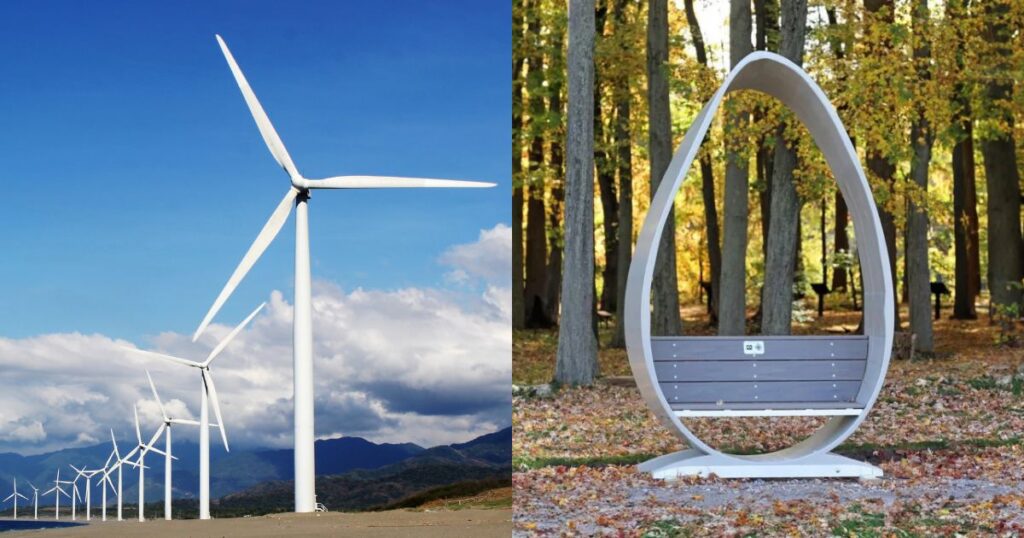
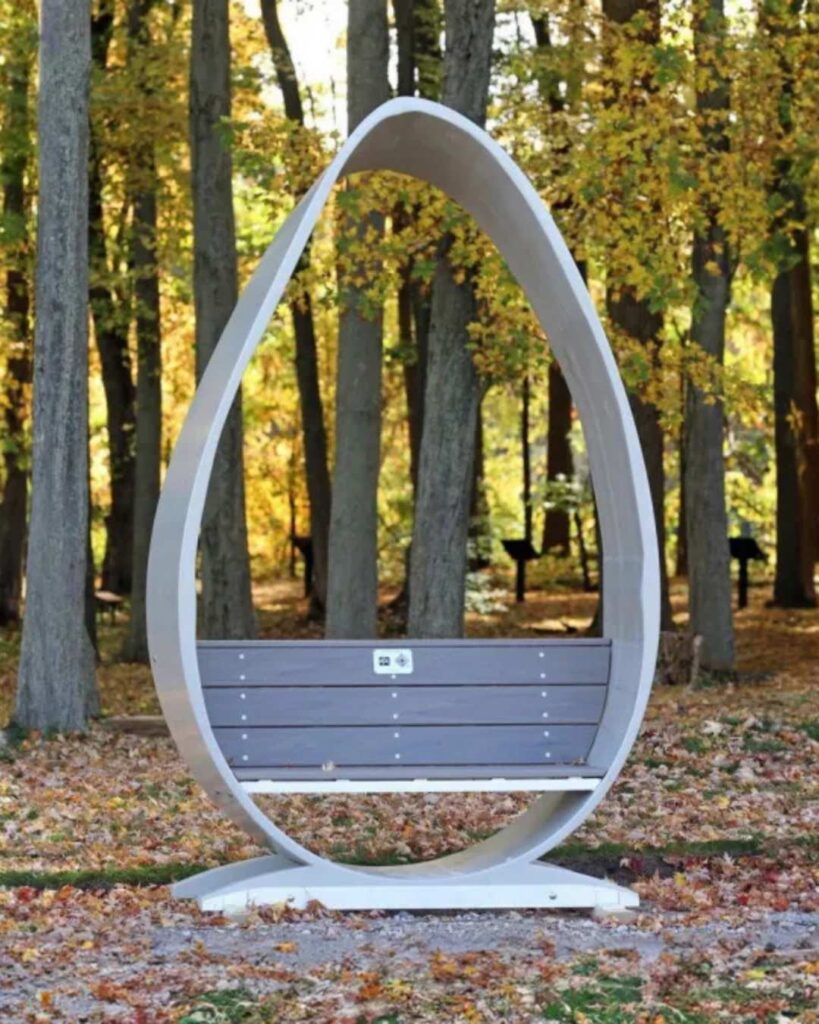
Other projects have explored turning blades into benches, playground features, and outdoor furniture.
Why does this work?
Because turbine blades are built to handle enormous forces. Even after retirement, suitable sections may retain useful structural properties.
Of course, engineers must inspect the materials and test whether they’re safe for their new purpose.
Not every blade can become a bridge.
But these projects show how an object designed for one job can sometimes serve an entirely different purpose.
There’s something rather fitting about a structure that once captured wind energy helping people cross a river.
What happens to the concrete foundations?
Wind turbine foundations are another important part of the recycling story.
These massive structures help keep turbines stable, even during strong winds.
They’re usually made from reinforced concrete, with steel embedded inside.
When a wind farm is decommissioned, foundation removal depends on local regulations, land agreements, and the site’s restoration plan.
Some projects remove the entire foundation. Others remove only the upper portion and leave deeper material underground where permitted.
Concrete that is excavated can be crushed and used as aggregate in construction projects, road bases, or other suitable applications.
The reinforcing steel can also be separated and recycled.
However, transporting and crushing large amounts of concrete takes energy and equipment.
As with other recycling activities, the environmental benefit depends partly on how far the material travels and what it replaces.
Does recycling wind turbines really help the environment?
Wind power produces electricity without the direct carbon emissions associated with burning coal, oil, or natural gas.
But manufacturing, transporting, installing, maintaining, and retiring turbines all have environmental impacts.
That’s why scientists use a method called life cycle assessment, or LCA.
It looks at a product’s environmental effects across its whole life, from raw material extraction to disposal or recycling.
For wind turbines, studies generally find that lifecycle greenhouse gas emissions are much lower than those from fossil fuel power generation.
Recycling can improve that picture further.
Recovering steel, copper, and other materials reduces the need for some new mining and manufacturing.
Reusing parts can also avoid the energy required to make replacements.
However, not every recycling process delivers the same benefits.
A process that uses large amounts of energy or requires long-distance transport may offer smaller environmental savings than expected.
That’s why engineers consider the whole system, not just whether a material can technically be recycled.
Are wind turbines completely recyclable yet?
Not quite.
Most of a turbine’s mass can already be handled through established recycling routes, but recovering all the materials at high quality remains difficult.
Blades are the main challenge, especially those made with traditional thermoset composites.
There are also practical issues.
Wind farms may be located far from recycling facilities. Transporting enormous blade sections can require special vehicles, road permits, and careful planning.
Recycling facilities need enough material to make operations financially worthwhile.
And as more turbines reach retirement age, the industry will need greater processing capacity.
The encouraging part is that manufacturers are beginning to design blades with their eventual retirement in mind.
For example, Siemens Gamesa has developed RecyclableBlade technology, which uses a resin system designed to allow easier separation of blade materials through a chemical process.
Other companies and research teams are investigating new resins, thermoplastic composites, and improved material recovery techniques.
The goal isn’t simply to recycle yesterday’s blades.
It’s to make tomorrow’s blades easier to recycle from the start.
What does the future of wind turbine recycling look like?
Wind energy is growing, and that means the number of turbines reaching retirement will grow too.
This creates both a challenge and an opportunity.
- A larger supply of retired components could support more specialized recycling businesses.
- Better blade designs may allow fibers and resins to be recovered with less damage.
- Improved recycling systems could also make it easier to track materials and find buyers for recovered products.
But technology alone won’t solve everything.
Clear regulations, collection systems, transport networks, and markets for recycled materials will all play a role.
There’s also a growing interest in the circular economy.
It’s a simple idea: instead of making products, using them, and throwing them away, we keep materials in use for as long as possible.
For wind energy, that could mean repairing turbines, refurbishing equipment, reusing blades where safe, and recycling materials when their working life ends.
Not every part will follow the same path.
And that’s fine. The aim is to make the most sensible use of each material while reducing waste and environmental harm.