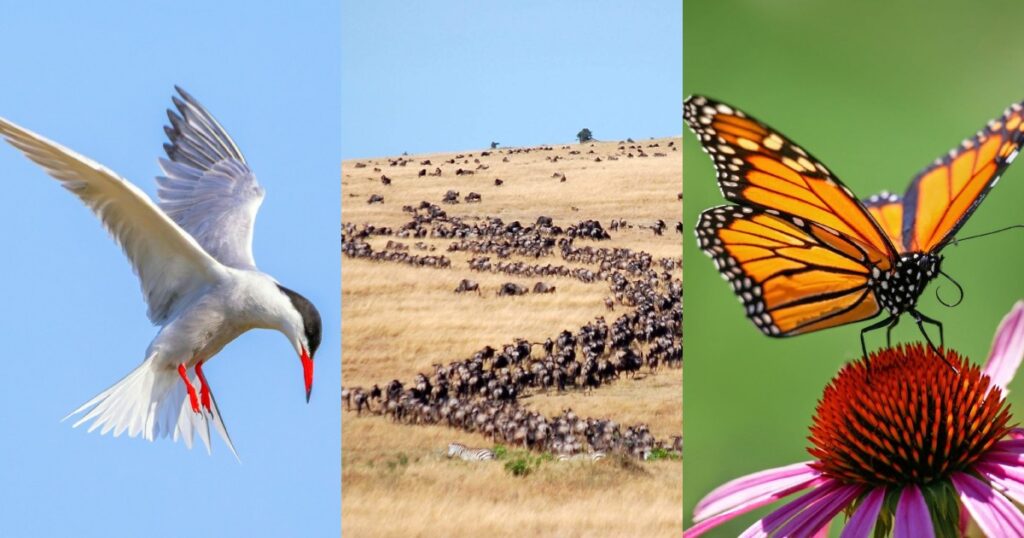
The Longest Animal Migrations: Incredible Journeys Across Land, Sea, and Sky
From tiny birds crossing vast oceans to giant whales swimming between icy feeding grounds and warm tropical waters, animal migration is one of nature’s greatest wonders.
Some creatures travel thousands of miles to find food. Others move to breed, escape harsh weather, or give their young a better chance of survival.
What makes these journeys even more remarkable is how animals find their way. Some follow the Sun and stars. Others sense Earth’s magnetic field or rely on smells, ocean currents, and landmarks.
So, which animals travel the farthest? And how do they survive such demanding trips?
Let’s explore the longest animal migrations on Earth and the surprising science behind them.
Why do animals travel such huge distances?
For most animals, migration isn’t about adventure. It’s about survival.
Food, water, and safe places to breed aren’t always available in one location throughout the year. As seasons change, animals must move to find the resources they need.
Take birds, for example. Many spend summer in northern regions, where long daylight hours and plenty of insects make raising chicks easier. When winter arrives, they head south to warmer areas with more food.
Whales follow a different pattern. Many feed in cold, nutrient-rich waters during summer, then travel to warmer seas to breed and give birth.
Migration also helps some animals avoid predators, drought, and extreme temperatures.
Of course, these trips come at a cost. Long-distance travel burns energy and exposes animals to storms, predators, and unfamiliar places. Yet for many species, staying put would be even riskier.
And some migrations are so long that they almost seem impossible.
1. Arctic tern: The bird that chases summer around the planet
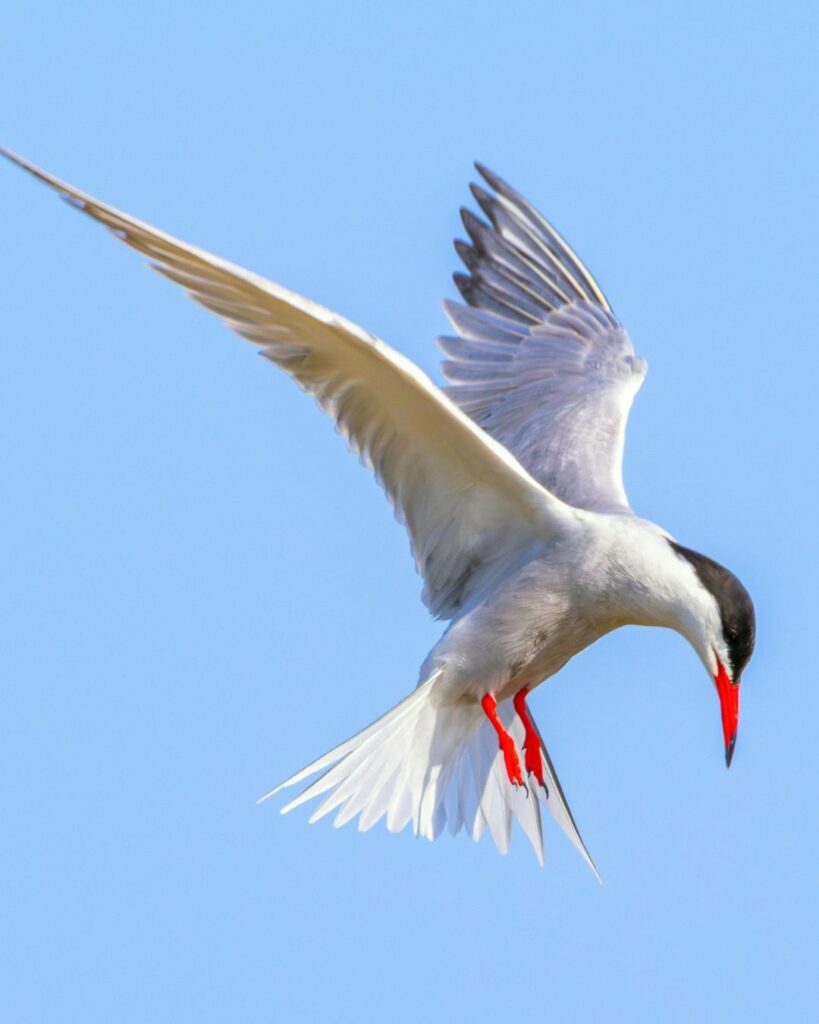
If there were an award for the greatest long-distance traveler in the bird world, the Arctic tern would be a strong contender.
This small seabird, which weighs around 100 grams, makes an extraordinary annual journey between the Arctic and Antarctic regions.
Arctic terns breed in the far north during the Northern Hemisphere’s summer. When the season ends, they head south, following winding routes across the Atlantic and other ocean regions toward Antarctic waters.
Once the Southern Hemisphere’s summer is over, they travel north again.
Tracking studies have recorded annual journeys of more than 70,000 kilometers (43,500 miles), with some birds covering over 90,000 kilometers (56,000 miles).
That’s nearly twice the distance around Earth’s equator.
How does such a small bird manage it?
The Arctic tern is built for long flights. Its narrow wings help it glide, while favorable winds reduce the energy needed to travel.
Rather than taking the shortest route, these birds often follow paths that offer better winds and feeding opportunities.
Their reward is remarkable. By moving between polar summers, Arctic terns enjoy more daylight than almost any other animal.
And because they can live for several decades, some may travel millions of kilometers over their lifetime.
Not bad for a bird that weighs about as much as a small apple.
2. Bar-tailed godwit: A nonstop flight that seems impossible
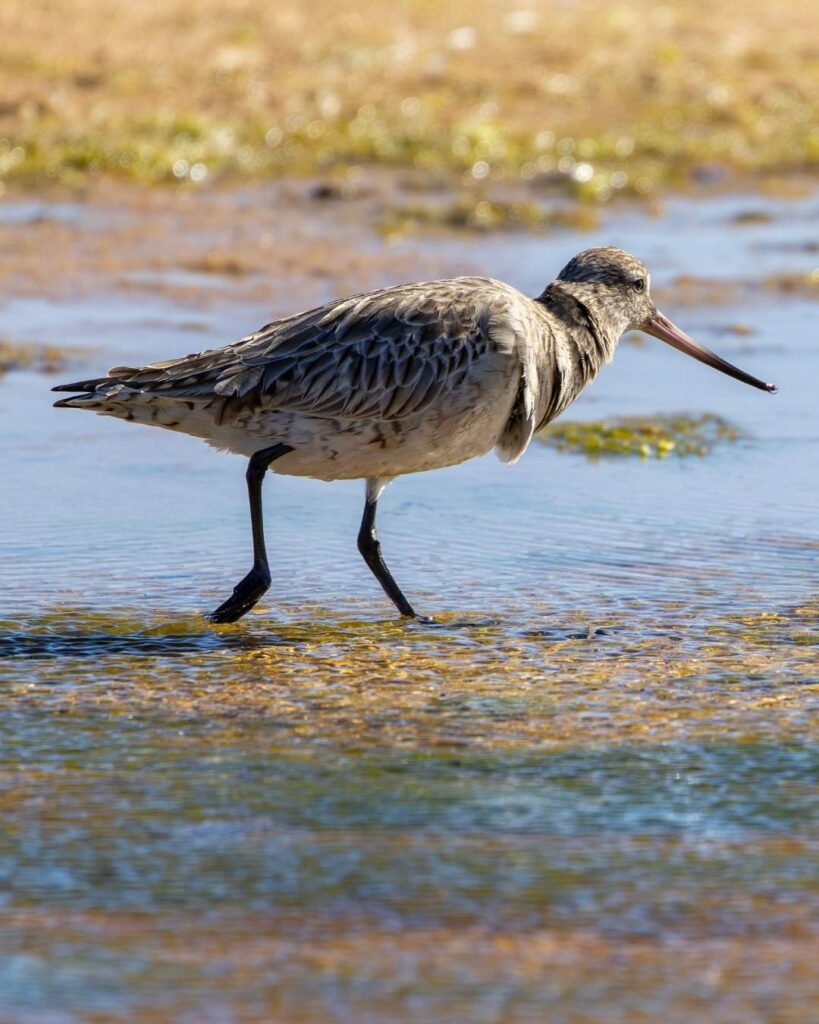
The Arctic tern may cover more ground over a year, but the bar-tailed godwit holds one of the most astonishing records for nonstop flight.
Some bar-tailed godwits travel from Alaska to New Zealand or Australia without landing to rest, eat, or drink.
In 2022, a satellite-tracked young godwit completed a flight of roughly 13,560 kilometers (8,425 miles) from Alaska to Tasmania in about 11 days.
Think about that. Nearly two weeks in the air, crossing the Pacific Ocean with no meal breaks.
A body built for endurance
Before migration, godwits eat huge amounts of food and store energy as fat. Some nearly double their body mass.
Their bodies also undergo temporary changes. Certain digestive organs shrink, helping reduce weight while the birds rely on stored fuel.
During the journey, they maintain efficient flight patterns and take advantage of favorable winds.
Scientists still have questions about how these birds sleep and navigate during such long flights. What is clear is that their bodies are finely suited to endurance.
It’s a remarkable reminder that some of nature’s best athletes don’t have impressive muscles or sharp teeth. They have feathers, fuel reserves, and an extraordinary sense of direction.
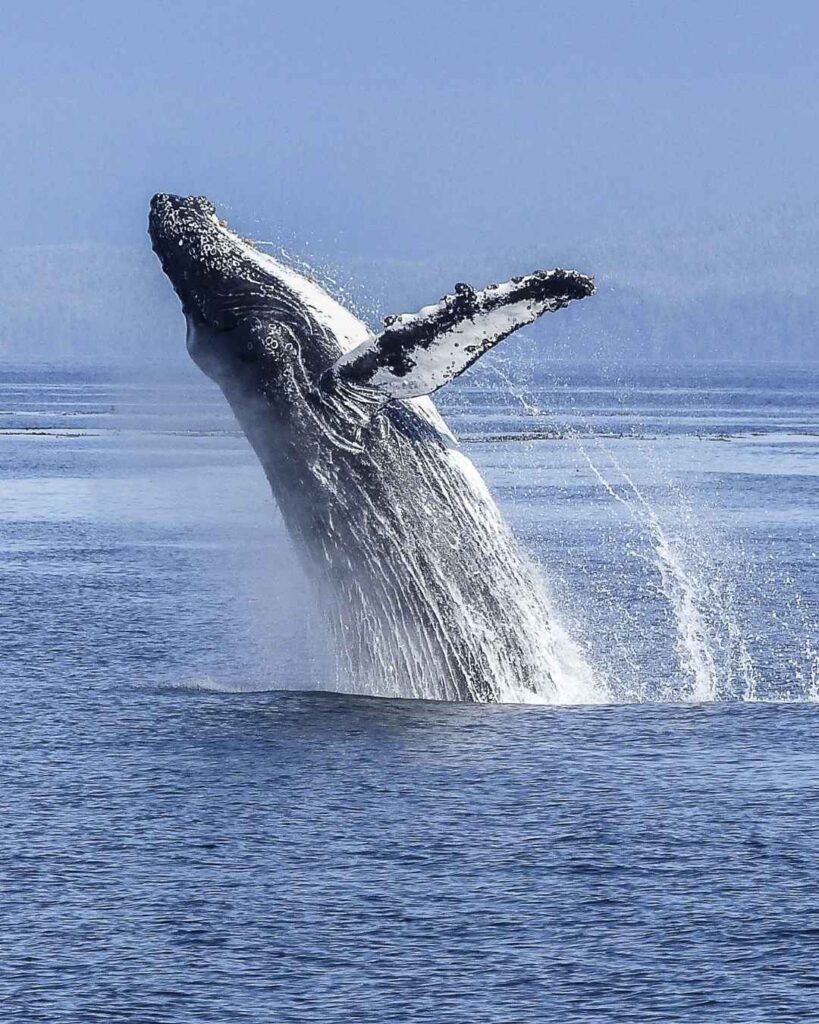
3. Humpback whale: A giant traveler of the oceans
Now, let’s leave the skies and head beneath the waves.
Humpback whales are among the longest-distance migrants of any mammal. Many populations travel thousands of kilometers between cold feeding grounds and warmer breeding areas.
Some migrations exceed 8,000 kilometers (5,000 miles) one way.
For example, humpbacks that feed in Antarctic waters may travel north toward tropical breeding grounds off South America, Africa, or Australia.
And unlike birds, these massive mammals must move their bodies through water, which creates constant resistance.
Why travel so far to have a calf?
Cold polar waters offer rich feeding opportunities, especially during the summer. Humpbacks eat krill and small schooling fish, building up thick fat reserves.
But many give birth in warmer waters, where newborn calves don’t face the same cold conditions found near the poles.
During migration and breeding, adult whales may eat little, relying heavily on stored energy.
Interestingly, humpbacks don’t all follow the same schedule or route. Different populations have distinct migration patterns, and some individuals don’t migrate every year.
Their journeys also bring a special challenge: protecting calves during the long return trip to feeding areas.
For a newborn whale, that first journey is a serious test of endurance.
4. Sooty shearwater: The seabird that crosses entire oceans
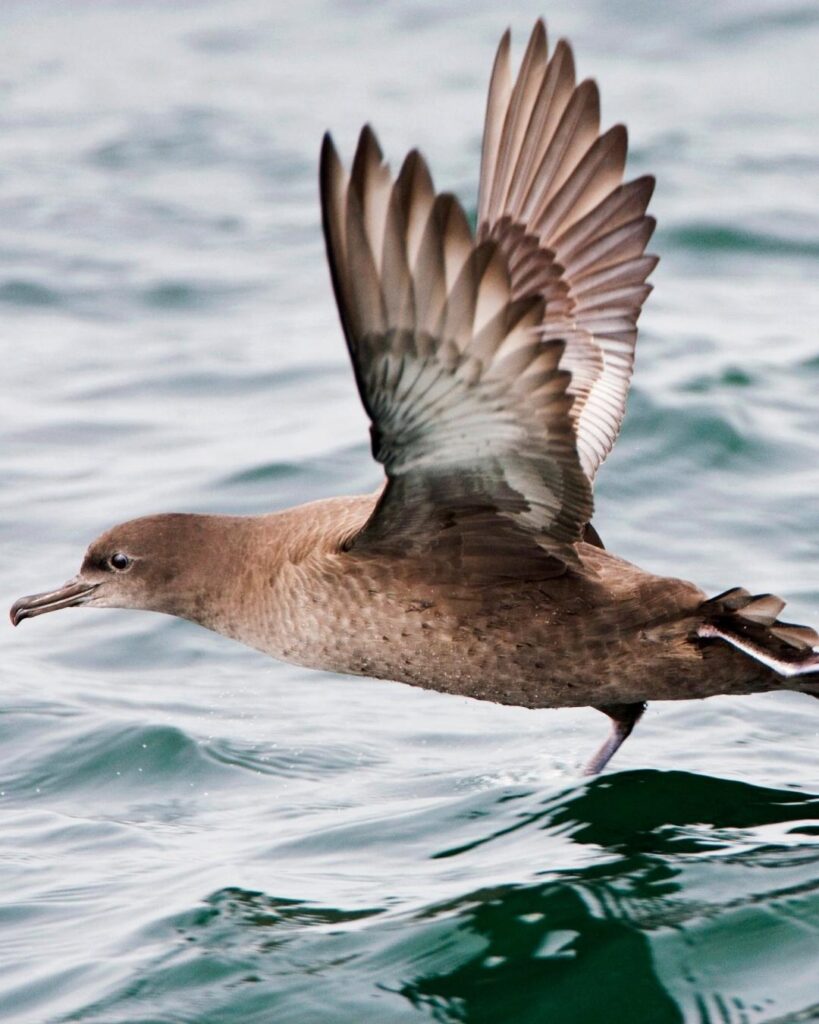
Sooty shearwaters might not have the fame of Arctic terns, but their travels are just as fascinating.
These dark-colored seabirds breed mainly in the Southern Hemisphere, including New Zealand and nearby islands. After breeding, many head north across the Pacific Ocean.
Tracking research has found that some individuals travel roughly 64,000 kilometers (40,000 miles) during their annual migration.
Their routes can form huge loops across the Pacific, linking waters near Japan, Alaska, California, and the Southern Hemisphere.
Riding the wind instead of fighting it
Watch a shearwater flying above rough seas, and you’ll notice something unusual.
It often skims just above the waves, banking from side to side with barely a wingbeat.
This technique, known as dynamic soaring, allows the bird to gain energy from differences in wind speed near the ocean’s surface.
It’s an efficient way to cover long distances.
Sooty shearwaters also depend on productive ocean regions where fish, squid, and other prey are abundant.
Their migration shows how closely wildlife movements are tied to ocean conditions. A change in currents or food supply can affect birds thousands of kilometers away.
5. Leatherback sea turtle: A slow traveler with incredible stamina
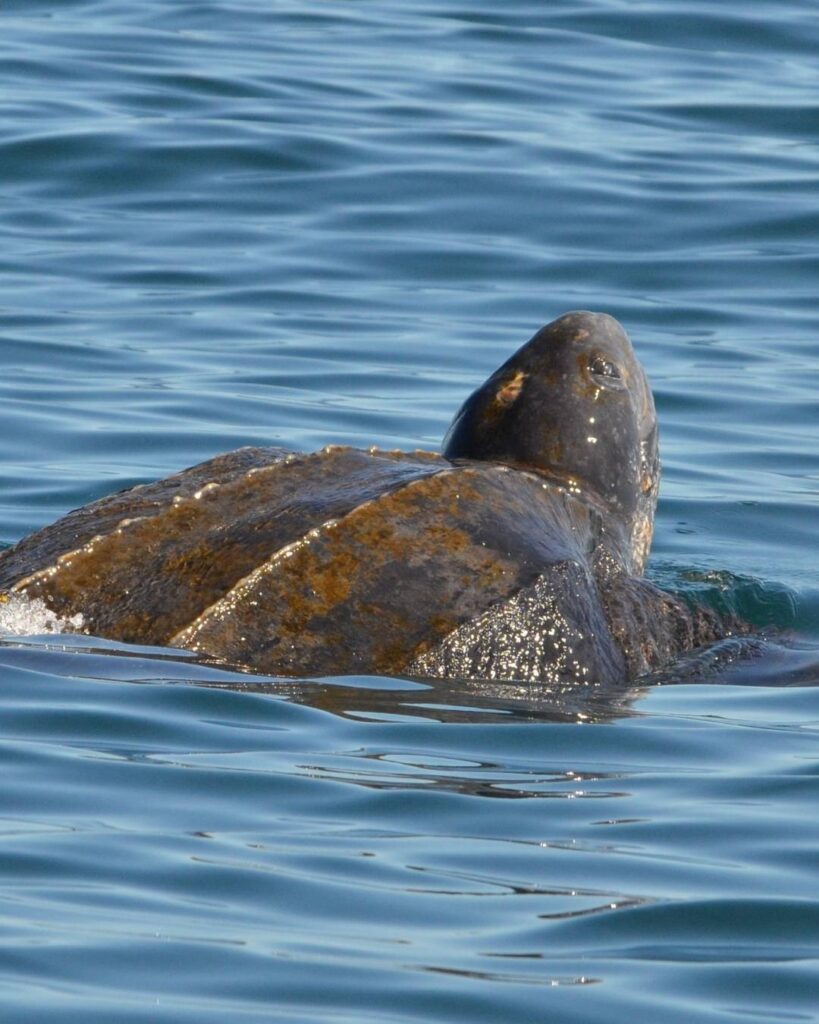
Leatherback sea turtles are the largest living turtles, and they’re among the ocean’s most impressive migrants.
Unlike most sea turtles, leatherbacks have a flexible, leathery shell rather than a hard outer shell made of large plates.
They also have powerful front flippers that help them swim across open seas.
Some leatherbacks travel more than 10,000 kilometers (6,200 miles) between nesting beaches and feeding grounds. Certain Pacific populations make journeys of over 12,000 kilometers.
Following a drifting food supply
Leatherbacks feed mainly on jellyfish and other soft-bodied animals.
Because jellyfish move with ocean currents and changing water conditions, turtles may need to cover enormous distances to find enough food.
Leatherbacks can also tolerate cooler water than many other reptiles. Their large size, insulation, and ability to retain body heat help them feed in temperate seas.
But there’s a troubling side to this story.
Plastic bags floating in the ocean can resemble jellyfish. When turtles swallow plastic, it can cause injury, digestive blockages, or death.
Fishing gear also poses a serious threat.
For an animal that crosses entire ocean basins, protecting one beach isn’t enough. Its survival depends on conditions across much of its route.
6. Monarch butterfly: A tiny insect with a remarkable family journey
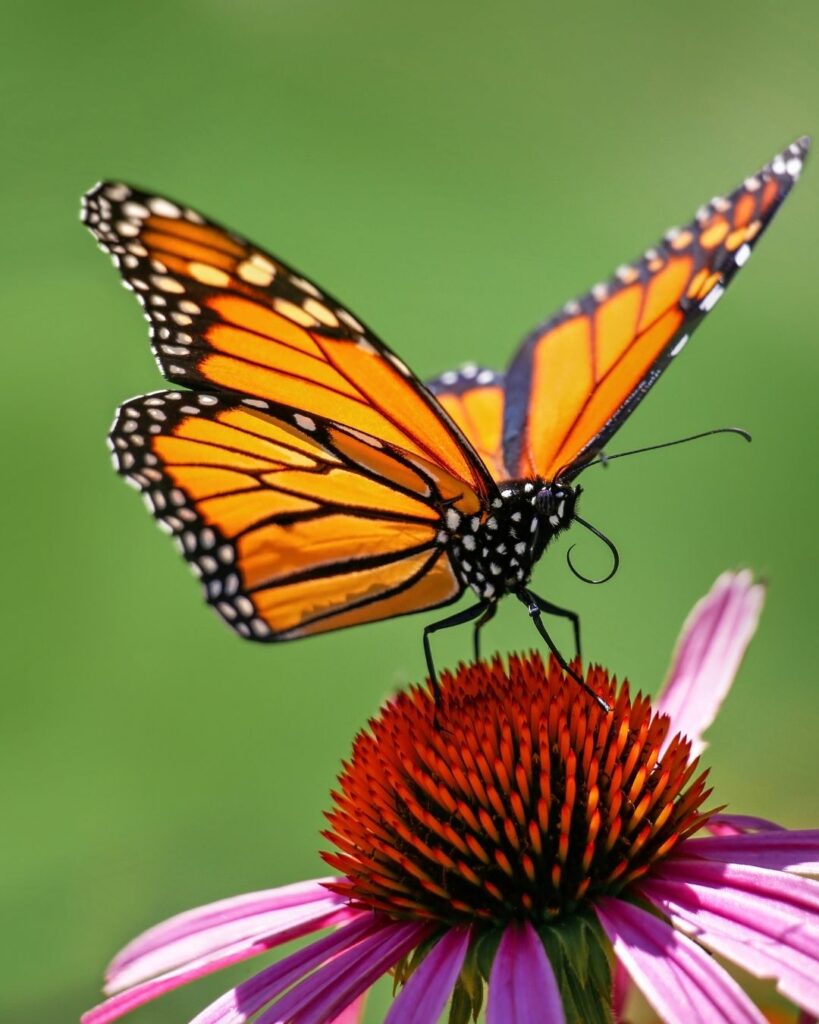
It’s hard to imagine a butterfly traveling thousands of kilometers. Yet monarch butterflies do exactly that.
Each autumn, millions of monarchs from eastern North America travel south toward mountain forests in central Mexico.
Some cover more than 4,000 kilometers (2,500 miles).
They gather in dense clusters on trees, where cool conditions help them conserve energy through winter.
But here’s the strange part: the butterflies that return north aren’t always the same individuals that eventually reach the northern breeding grounds.
A migration that spans generations
Monarch migration is a family affair.
In spring, overwintering butterflies begin moving north and lay eggs. Their offspring continue the journey, and several generations may develop over the warmer months.
Then, as autumn approaches, a special long-lived generation emerges.
These butterflies delay reproduction and head south, often reaching wintering sites they’ve never visited.
How do they know where to go?
Research suggests monarchs use a time-compensated Sun compass, with internal biological clocks helping them maintain direction. Magnetic cues may also play a role.
Sadly, monarch populations face pressure from habitat loss, pesticides, climate change, and the decline of milkweed, the plant their caterpillars need.
Their migration is proof that even the smallest travelers can depend on a vast network of habitats.
7. Caribou: One of the greatest migrations on land
Not all great migrations happen in the air or sea.
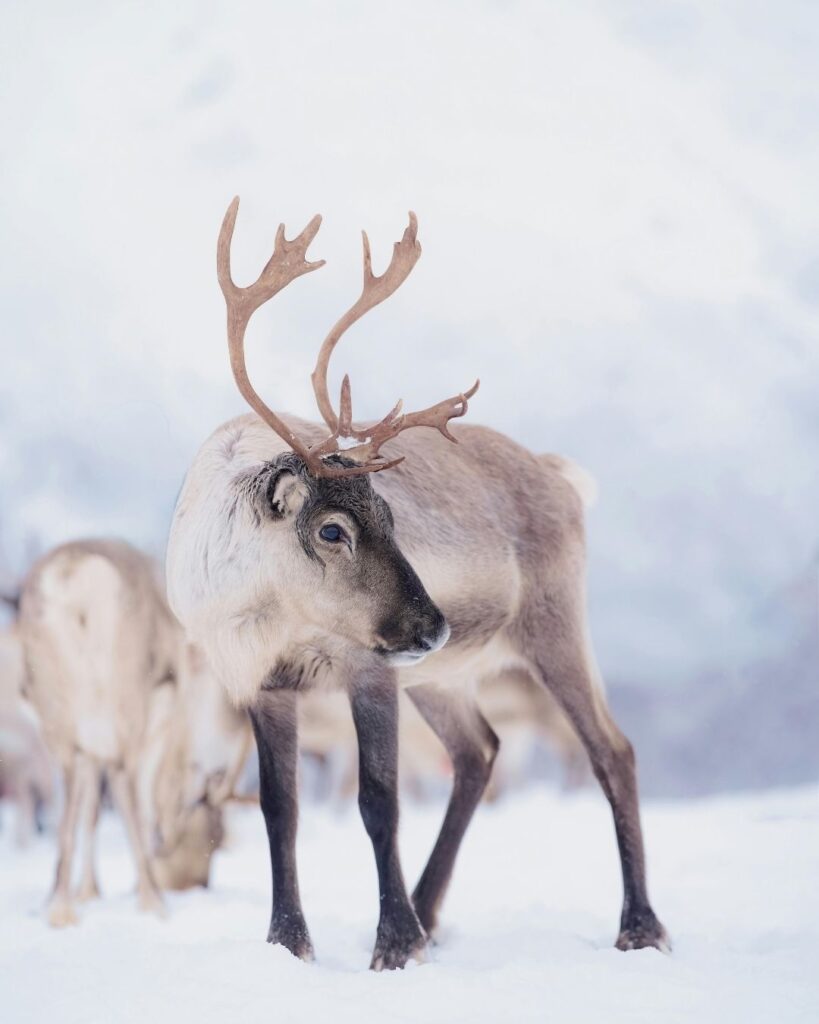
Across the Arctic tundra, huge herds of caribou move between seasonal ranges in search of food and suitable places to give birth.
Some populations travel several thousand kilometers each year, with certain herds covering more than 4,000 kilometers when their movements are added together.
Caribou migration isn’t a neat straight line. Herds often wander across vast landscapes as snow, vegetation, insects, and weather conditions change.
Life on the move
In spring, many female caribou head toward traditional calving areas.
During summer, herds seek nutritious plants while trying to avoid biting insects. In winter, they move toward places where they can reach lichens and other food beneath the snow.
These journeys shape entire Arctic ecosystems.
Wolves, bears, and other predators follow or depend on caribou. Their grazing also influences vegetation and nutrient movement.
Yet roads, fences, mines, and other developments can disrupt traditional routes.
For caribou, an obstacle that looks small on a map can become a major problem when thousands of animals need to pass through the same area.
8. Wildebeest: The famous great migration of Africa
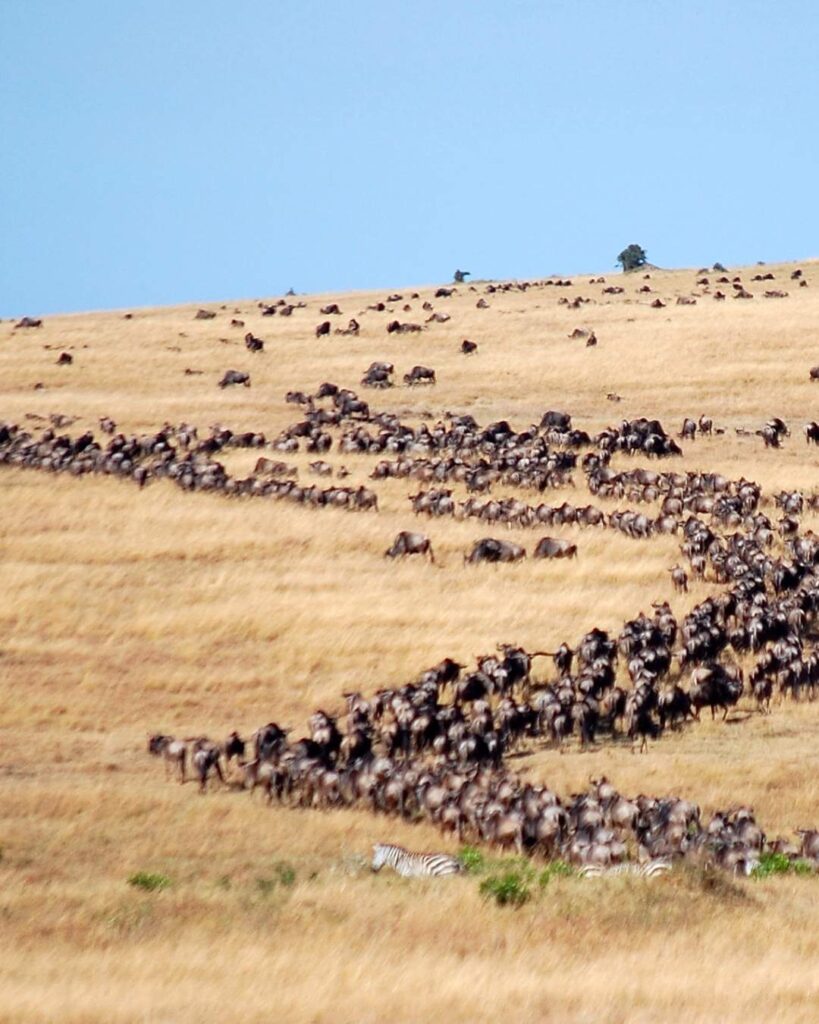
Few wildlife events are as dramatic as the great wildebeest migration.
Across the Serengeti-Mara ecosystem of Tanzania and Kenya, more than a million wildebeest move through grasslands, often joined by hundreds of thousands of zebras and gazelles.
The animals follow seasonal rainfall and fresh grass, making a broad circuit that may total around 800 to 1,000 kilometers in a year, though actual distances vary.
Their route includes river crossings where crocodiles wait, as well as open plains where lions and hyenas hunt.
It’s a tough journey, but the rewards are worth the risk.
The rains set the schedule
Unlike migrations guided by a fixed calendar, wildebeest movements depend heavily on rainfall.
When rains arrive, fresh grass grows. The herds follow.
Calving usually takes place on the southern Serengeti plains early in the year, where nutritious grasses help mothers produce milk.
Large numbers of calves are born within a short period. This flood of newborns can overwhelm predators, allowing more young to survive.
The migration also supports the wider ecosystem by moving nutrients, grazing vegetation, and providing food for predators and scavengers.
It’s not the longest animal migration on Earth, but it’s certainly one of the most spectacular.
9. Great white shark: A surprising ocean wanderer
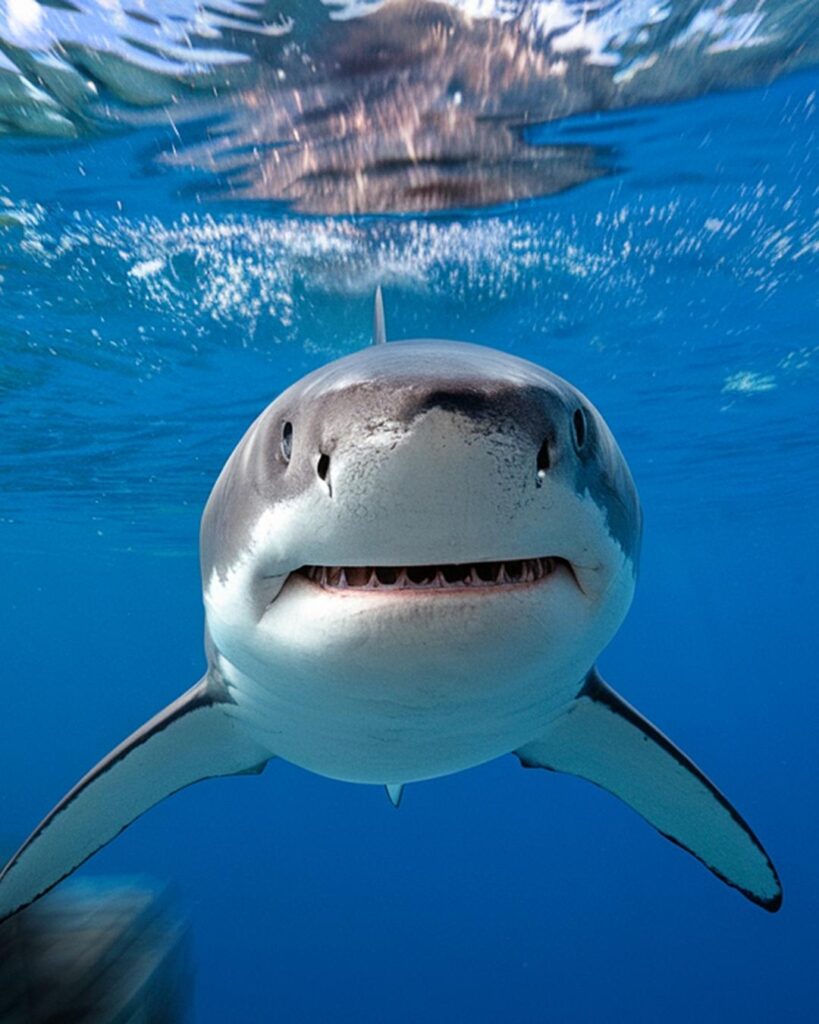
Great white sharks are often pictured patrolling coastal waters, but some travel far beyond the shoreline.
Satellite tracking has revealed journeys across entire ocean regions.
One famous tagged female shark traveled from South Africa to waters near Australia and later returned, covering roughly 20,000 kilometers (12,400 miles) across the round trip.
Other great whites move between coastal feeding areas and offshore regions, sometimes spending months far from land.
What draws sharks into the open ocean?
Scientists are still working out the full story.
Some movements may relate to breeding, feeding, seasonal changes, or other behaviors that remain poorly understood.
In the northeastern Pacific, for example, certain white sharks travel between coastal waters and a remote offshore region sometimes called the White Shark Café.
Tracking data show that these sharks don’t simply drift with currents. They make directed movements through open water.
Understanding these routes matters for conservation, especially when sharks cross international boundaries or enter busy fishing areas.
Even a powerful predator can face serious risks during a long migration.
10. Southern elephant seal: A deep-diving marathon swimmer
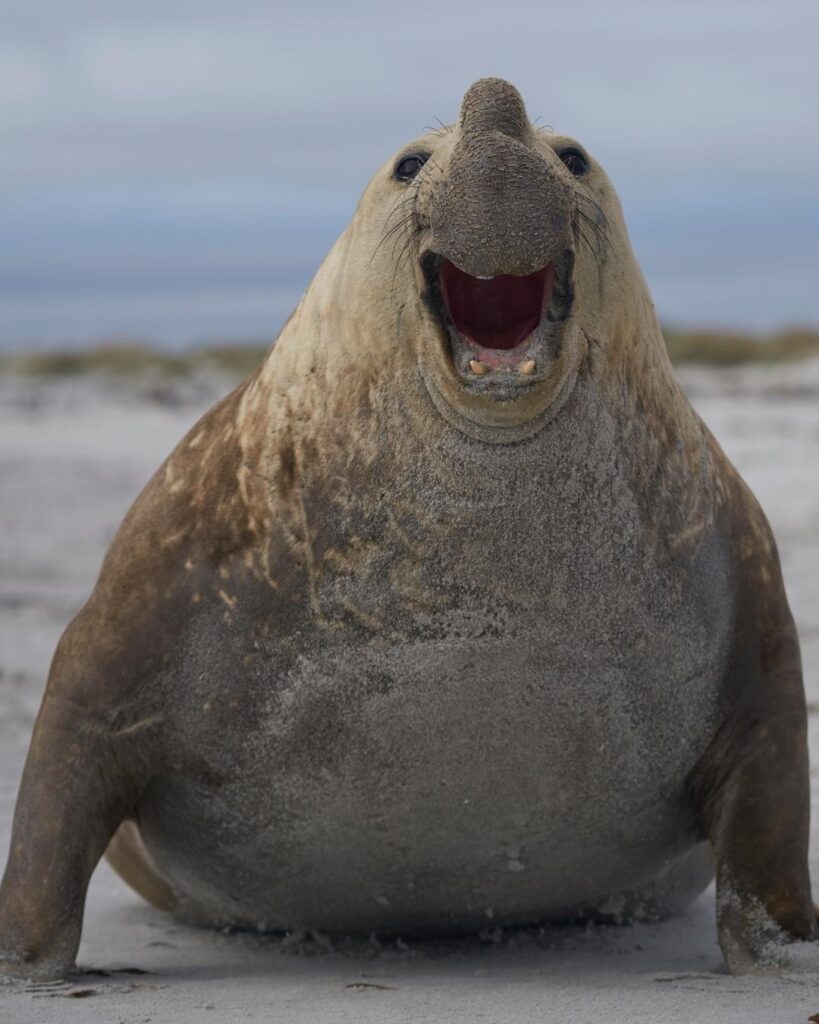
Southern elephant seals are enormous marine mammals that spend much of their lives at sea.
They breed and molt on remote islands and coastal areas, then head into the Southern Ocean to feed.
Some individuals cover tens of thousands of kilometers over a year as they travel between land and distant feeding regions.
But distance is only part of their story.
Elephant seals are also extraordinary divers. They routinely descend hundreds of meters and can reach depths exceeding 1,500 meters.
Living between two worlds
On land, elephant seals can seem slow and awkward. Underwater, they’re highly capable hunters.
Their bodies store large amounts of oxygen in blood and muscle, helping them remain submerged for long periods.
They feed on fish and squid, often diving repeatedly throughout the day and night.
Researchers use tracking tags to study their movements, diving patterns, and the ocean conditions they encounter.
These animals can even help scientists gather information from remote parts of the Southern Ocean where research ships rarely travel.
In a way, elephant seals are both remarkable migrants and unexpected ocean research assistants.
How do migrating animals find their way?
After hearing about these journeys, one question keeps coming up: how do animals know where they’re going?
There isn’t one universal answer. Different species use different tools, and many combine several methods.
- Earth’s magnetic field: Sea turtles, some birds, and other animals can detect magnetic information that helps with navigation.
- The Sun and stars: Migratory birds and insects can use celestial cues to maintain direction.
- Smell: Salmon, for example, use chemical cues to help locate their home rivers.
- Landmarks: Mountains, coastlines, and other familiar features can guide experienced travelers.
- Ocean currents and winds: Animals may use moving air or water to reduce the energy needed for travel.
Some species also learn routes from older animals. Others appear to inherit parts of their navigation system.
Scientists study these abilities using satellite tags, GPS devices, radar, and tiny tracking sensors.
Projects such as Movebank help researchers store and analyze movement data from animals around the world.
The more we learn, the clearer it becomes that migration isn’t simply a matter of moving from point A to point B. It’s a complex response to changing conditions, shaped by evolution over countless generations.
Why the world’s longest migrations are under threat
Long migrations depend on connected habitats.
A bird might breed in the Arctic, feed in the Atlantic, and rest along the African coast. If just one important stopover site disappears, the entire journey can become harder.
Climate change is shifting seasons, changing ocean temperatures, and affecting food supplies. Some animals may reach breeding or feeding areas before the resources they depend on are available.
Human activity creates other problems.
Fishing nets can trap turtles, whales, and seabirds. Roads and fences can block land migrations. Coastal development can destroy nesting beaches and wetlands.
Artificial lights can also confuse migrating birds and newly hatched sea turtles.
The challenge is that migratory animals rarely stay within one country’s borders. Protecting them often requires cooperation across continents and oceans.
International efforts, including the Convention on the Conservation of Migratory Species of Wild Animals, aim to support that cooperation.
And while conservation can seem like a huge task, small actions matter too. Protecting wetlands, reducing plastic waste, supporting responsible fisheries, and preserving natural corridors all help keep migration routes open.
What can these amazing journeys teach us?
The longest animal migrations reveal something remarkable about life on Earth.
A tiny Arctic tern can travel between polar regions. A shorebird can cross the Pacific without stopping. A whale can navigate thousands of kilometers through open ocean, while a butterfly can find a forest it has never seen.
These animals don’t travel for the thrill of it. They move because their lives depend on reaching the right place at the right time.
And their journeys connect ecosystems that may be separated by entire oceans.
As scientists develop better tracking technology, they’re finding new routes, unexpected behaviors, and surprising links between distant habitats.
There’s still plenty we don’t know.
Perhaps that’s what makes animal migration so fascinating. Even in an age of satellites and global maps, wild creatures continue to accomplish journeys that leave us scratching our heads.
The next time you see birds flying overhead or butterflies passing through a garden, consider where they might be heading.
They could be taking part in one of the greatest journeys on the planet.