The Kākāpō Comeback: How New Zealand’s Rarest Parrot Returned From the Brink of Extinction
Imagine a parrot that can’t fly, smells a bit like honey, and only looks for love when the forest trees decide it’s time. Sounds like something from a children’s book, doesn’t it?
But the kākāpō is very real. And its story is one of the most remarkable wildlife comebacks on Earth.
This large, moss-green parrot once roamed the forests of New Zealand in huge numbers. Then came centuries of hunting, habitat loss, and introduced predators. By the 1990s, fewer than 60 known birds remained.
Extinction seemed almost certain.
Yet today, the kākāpō is still here. Thanks to years of patient conservation work, clever science, and a fair bit of luck, its population has grown to several hundred birds.
The species isn’t safe yet. Far from it. But its survival shows what can happen when people refuse to give up on a species that seems lost.
So, how did a flightless, nocturnal parrot manage to beat such terrible odds?
First, meet the world’s strangest parrot
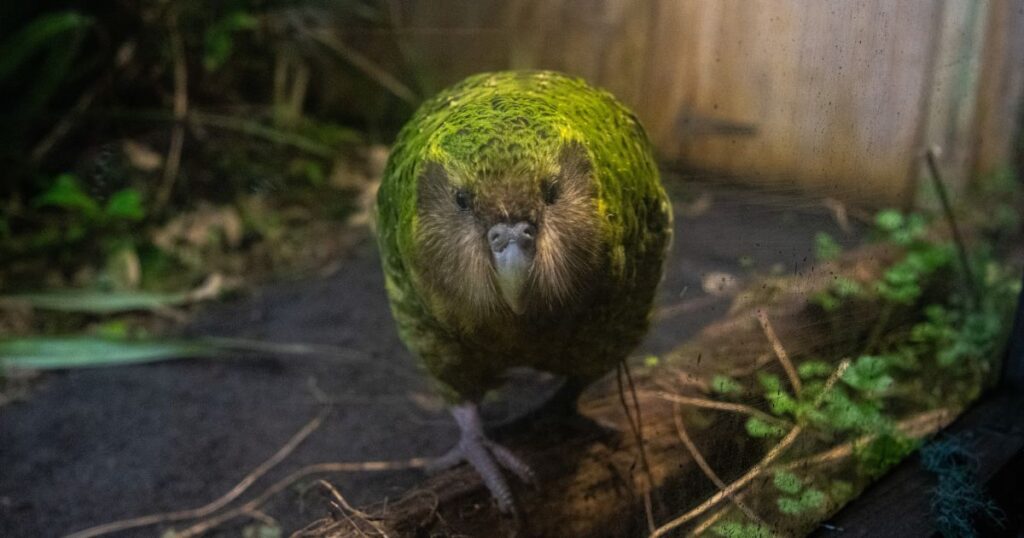
The kākāpō (Strigops habroptilus) isn’t your average parrot.
For starters, it can’t fly. Its wings are short, and its body is too heavy for sustained flight. Instead, it walks, climbs trees, and sometimes uses its wings to slow a clumsy descent.
It’s also the world’s heaviest living parrot. Large males can weigh more than four kilograms, roughly the weight of a small house cat.
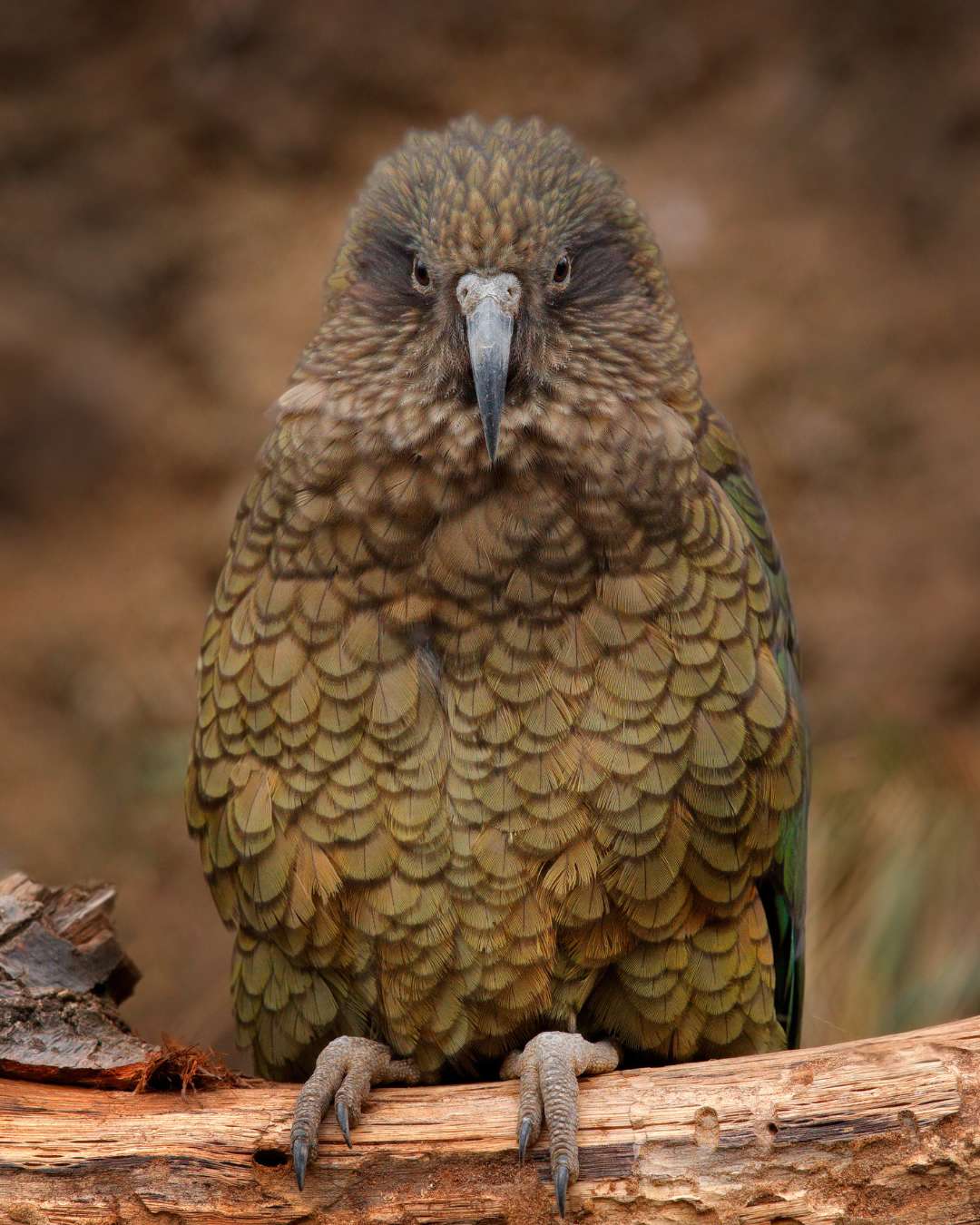
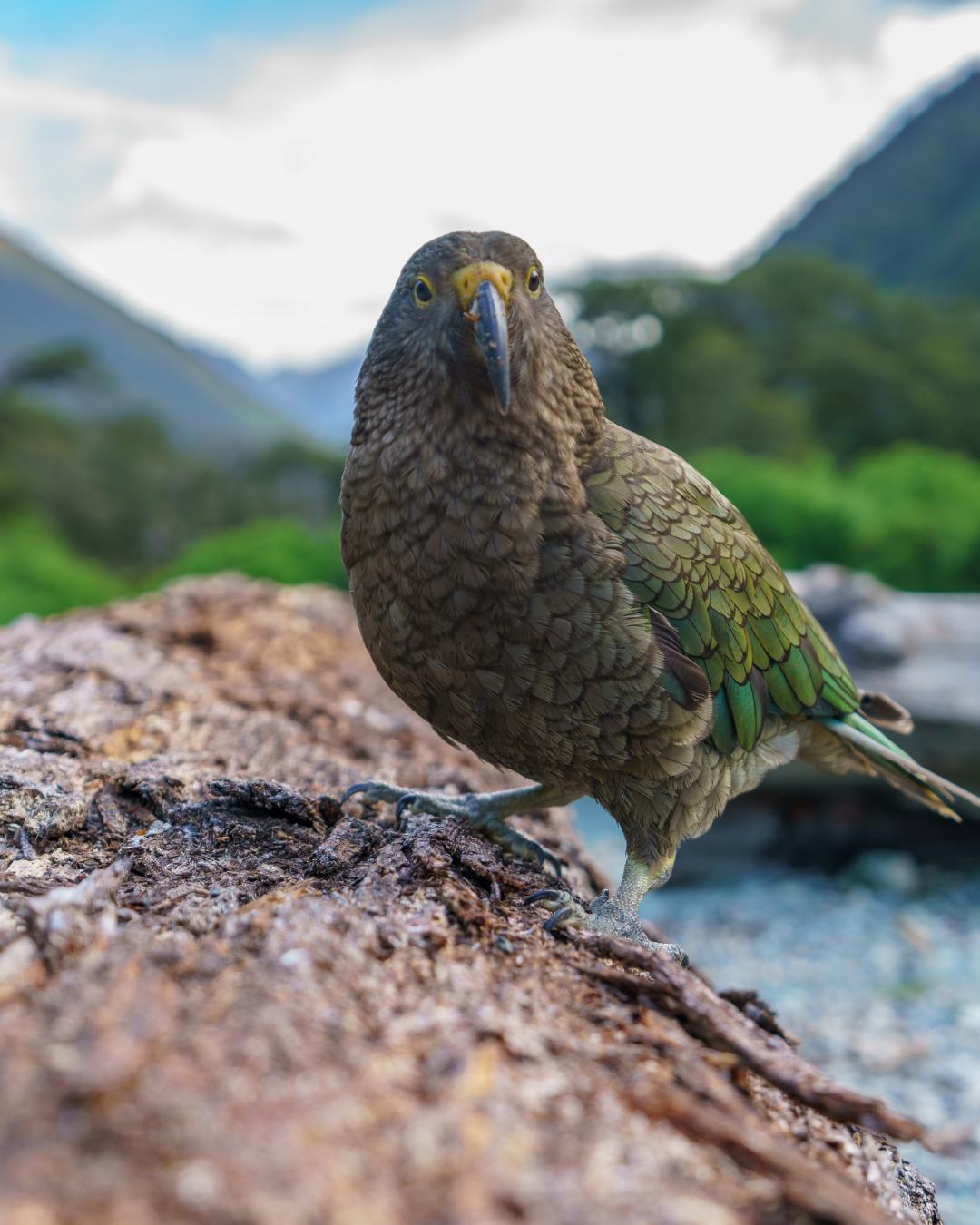
Then there’s its face. With a round facial disc, whisker-like feathers, and forward-facing eyes, the kākāpō looks rather like an owl wearing a green feather coat. That’s why it’s sometimes called the owl parrot.
And unlike most parrots, it’s nocturnal.
While other birds fill the morning air with calls, the kākāpō spends much of the day resting. At night, it heads out to feed on leaves, shoots, fruit, seeds, and other plant matter.
Its feathers have a sweet, musky scent. This may help birds recognize one another, though the smell can also make them easier for mammals to find.
For millions of years, these unusual traits weren’t a problem. New Zealand had no native land mammals that hunted adult birds.
The kākāpō evolved in a place where hiding, climbing, and blending into the forest worked well.
Then everything changed.
How did the kākāpō nearly disappear?
Long before humans arrived, kākāpō lived across much of New Zealand. They occupied forests, scrublands, and other habitats, from low valleys to mountain slopes.
Their green feathers helped them disappear among moss and leaves. When threatened, they often froze rather than fled.
That trick worked against predators that hunted mainly by sight. Against mammals that followed scent, it was a disaster.
The first major changes came after Polynesian settlers, the ancestors of Māori, reached New Zealand in the late 13th century.
Kākāpō were hunted for food and feathers. The Pacific rats, or kiore, that arrived with people also threatened eggs and young birds.
Later, European settlement brought a new wave of danger.
Cats, stoats, rats, and other introduced mammals spread through the country. They hunted birds that had never evolved strong defenses against them.
The kākāpō’s inability to fly made escape difficult. Worse still, females nested on the ground, leaving eggs and chicks exposed.
Forests were also cleared for farms, towns, and roads.
By the 20th century, the species had vanished from most of its former range.
Early conservation workers searched remote forests, hoping to find surviving birds. They found some, but the situation was worse than anyone wanted to believe.
Many of the surviving kākāpō were males. Without enough females, even a population free from predators would struggle to recover.
By 1995, the known population had fallen to just 51 birds.
The rescue mission that changed everything
The turning point came when conservationists began moving surviving kākāpō to offshore islands where introduced predators had been removed or could be kept under control.
This was no small task.
Kākāpō are shy, active at night, and often hidden deep in thick vegetation. Finding them required long searches through rough country, sometimes in cold and wet conditions.
Conservation workers used radio transmitters, tracking equipment, and specially trained dogs to locate birds.
Once found, the parrots were carefully captured and moved to safer homes.
Islands such as Whenua Hou (Codfish Island) and Te Hauturu-o-Toi (Little Barrier Island) became important refuges during different stages of the recovery effort.
These places offered something the kākāpō hadn’t enjoyed for generations: a chance to live without constant attacks from introduced mammalian predators.
But moving the birds was only the beginning.
In 1995, New Zealand’s dedicated Kākāpō Recovery Program entered a new phase, with more intensive management and a clear focus on increasing the population.
Scientists, rangers, veterinarians, volunteers, and Māori partners worked together to protect the remaining birds.
They monitored nests, improved food supplies when needed, tracked breeding activity, and studied each bird’s health.
Slowly, the population began to grow.
Not every year brought good news. Some breeding seasons failed, chicks died, and new health threats appeared.
Still, the overall trend changed.
For the first time in decades, the kākāpō had a realistic chance of survival.
There’s one big problem: kākāpō rarely breed
You might think that keeping predators away would be enough to save a bird species.
With the kākāpō, things aren’t quite so simple.
These parrots have one of the most unusual breeding systems in the bird world.
They don’t breed every year. Instead, breeding is closely tied to the heavy fruiting of certain native trees, especially the rimu.
Rimu trees produce large crops of fruit only in some years. When conditions are right, female kākāpō can gain the energy they need to produce eggs and raise chicks.
When the trees produce little fruit, the birds may skip breeding altogether.
That means conservation workers can’t simply expect a new generation of chicks every spring.
They have to wait for the forest.
A love song that travels through the forest
Male kākāpō don’t build nests or help raise chicks. Instead, they gather at display sites during the breeding season.
Each male prepares shallow bowls in the ground and produces deep, booming calls that can travel over long distances.
The sound is made using an inflated air sac. It’s less like ordinary birdsong and more like a distant drum.
Females visit the display areas, choose a mate, and then leave to nest alone.
Scientists call this a lek breeding system.
It’s rare among parrots and makes managing a tiny population especially difficult.
Some males attract more mates than others. A few may father many chicks, while others never breed. For conservationists trying to protect genetic diversity, that’s a real headache.
They need more chicks, but they also need chicks from a wide range of parents. Otherwise, the population could grow in number while losing valuable genetic variation.
Science gave the kākāpō a helping hand
Protecting the remaining birds was essential, but modern conservation science helped push the recovery further.
One important tool was supplementary feeding.
During certain breeding seasons, conservation workers provided specially designed food to help females maintain healthy body condition.
This had to be handled with care. Feeding can affect breeding behavior, and early research showed that a female’s condition could influence the sex of her chicks.
Because the population needed more females, simply producing more chicks wasn’t always enough.
Scientists adjusted feeding plans as they learned more.
Another major advance was artificial insemination.
In a population with so few birds, natural mating doesn’t always bring together the most useful genetic pairings.
Artificial insemination allows conservation workers to use sperm from selected males, including those that might otherwise have few chances to reproduce.
The technique has helped produce kākāpō chicks and improve the breeding contribution of some males.
Then came genetic research.
Scientists have studied the genomes of the surviving birds to better understand their relationships, inherited health risks, and remaining genetic diversity.
This information helps guide breeding decisions and long-term population planning.
Technology also makes daily care easier.
Many kākāpō carry small tracking devices that allow rangers to monitor their movements and activity. During breeding seasons, teams can follow nesting behavior and respond when a bird needs help.
Some eggs are checked, and vulnerable chicks may receive veterinary care or temporary hand-rearing.
It’s intensive work. But when a species has only a few hundred members, leaving everything to chance can be risky.
The tiny chicks that brought enormous hope
One of the most encouraging moments in the recovery story came in 2019.
That year, an unusually strong breeding season produced 73 surviving chicks, a record result for the modern recovery program.
The population rose sharply.
For people who had spent years watching the species struggle, it was a remarkable achievement.
The success was linked partly to a strong rimu fruiting season, which provided excellent conditions for breeding.
It also reflected decades of careful work.
Predator-free habitat, nest monitoring, genetic management, supplementary feeding, and veterinary care had all helped create the conditions for success.
The 2022 breeding season brought another major increase, with 55 chicks surviving to the program’s official count.
These numbers may sound small when compared with common birds. But for a species that had only 51 known individuals in 1995, they were huge.
Each chick represented another chance to rebuild the population. And some of those chicks would eventually become parents themselves.
That’s when a recovery starts to gain real momentum.
A record-breaking year brought fresh hope
The recovery reached another milestone in 2026.
After four years without a breeding season, the birds began mating again as rimu trees prepared to produce a large fruit crop.
The results were extraordinary.
On September 1, 2026, New Zealand’s Department of Conservation announced that 90 chicks had survived to 150 days of age and joined the official population.
It was the largest number recorded during the modern recovery era. The species had crossed the 300-bird mark for the first time in what may have been around 75 years.
The kākāpō recovery in numbers
Official population counts at selected milestones, not annual estimates.
The 2026 season also showed how conservation work is changing.
Rather than checking every nest as often as possible, teams began testing ways to give the birds more freedom while still protecting vulnerable chicks.
The goal is no longer just to keep individual birds alive. It’s to help create populations that can survive and breed with less human support.
That’s a much bigger challenge.
Why the kākāpō still needs our help
Despite its remarkable recovery, the kākāpō remains critically endangered.
A population of 325 birds is still tiny. A disease outbreak, predator invasion, or major environmental disaster could cause serious harm.
Low genetic diversity is another concern.
When a species falls to just a few dozen individuals, much of its genetic variation can disappear. This is called a genetic bottleneck.
It can increase the risk of inherited health problems and make it harder for a population to adapt to future changes.
Kākāpō also face fertility problems and low egg-hatching success, both of which complicate recovery.
Then there’s the question of space.
The birds need large, safe areas with suitable food and nesting habitat. As their numbers rise, finding enough predator-free land becomes more important.
Conservationists hope to establish more populations and eventually return kākāpō to parts of their former range.
But that can only happen when the habitat is safe enough.
It’s a delicate balance between giving the birds room to live naturally and protecting them from threats they still can’t handle alone.
What this unusual parrot can teach us about conservation
The kākāpō’s recovery offers a lesson that goes well beyond New Zealand.
Saving a species rarely comes down to one clever idea.
It takes habitat protection, scientific research, long-term funding, and people who are willing to keep working when progress feels painfully slow.
Māori communities play an especially important role. Kākāpō are considered taonga, or treasures, and the recovery program partners with Ngāi Tahu, whose cultural connection to the species runs deep.
That relationship shows how traditional knowledge, cultural responsibility, and modern science can support the same conservation goal.
The story also reminds us that wildlife recovery doesn’t happen on a human timetable.
Kākāpō breed when the forest provides the right conditions. They grow slowly, live for decades, and may take years to produce their first chicks.
Conservation has to respect that rhythm.
Perhaps the most encouraging lesson is that extinction isn’t always inevitable, even when the numbers look hopeless.
But the earlier we act, the better the chances.
A future where kākāpō can thrive again
Somewhere in a New Zealand forest, a male kākāpō may be climbing a ridge, clearing a small bowl in the soil, and preparing to send his deep mating call through the trees.
It’s a sound that almost vanished forever.
Today, thanks to decades of conservation work, there are more kākāpō alive than at any point in the modern recovery program.
The species has moved from the edge of extinction toward a future that once seemed impossible.
Still, survival isn’t the same as security.
The real success will come when kākāpō can raise their chicks, move through healthy forests, and maintain thriving populations without constant human care.
That day may be many years away.
For now, though, the return of this strange, gentle, flightless parrot is something worth celebrating.
After all, a bird that can’t fly has given conservationists one of their most uplifting success stories.
And its comeback is still being written.