How Scientists Are Using Azolla to Fight Climate Change
At first glance, Azolla doesn’t look like something that could have much influence on the planet.
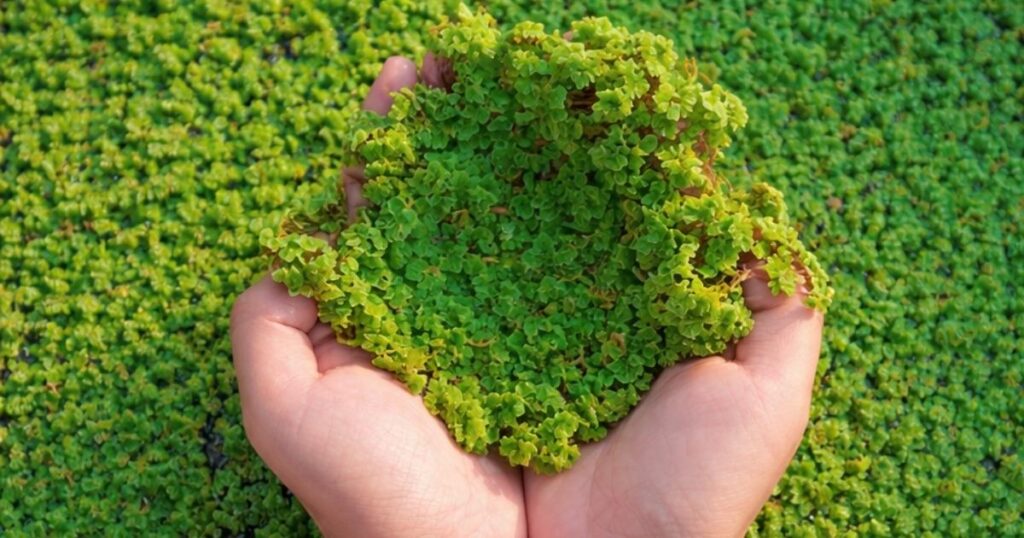
It’s tiny. It floats. A single plant can sit comfortably on a fingertip. When thousands gather on still water, they form a green or reddish carpet that looks a lot like algae.
Yet Azolla isn’t an alga at all. It’s a small aquatic fern, and scientists are increasingly interested in what this unassuming plant might do for agriculture, carbon storage, and climate change.
Azolla has been associated with dramatic changes in Earth’s climate before. Now researchers are asking whether some of its unusual talents can be put to work again, this time deliberately.
First, what exactly is Azolla?
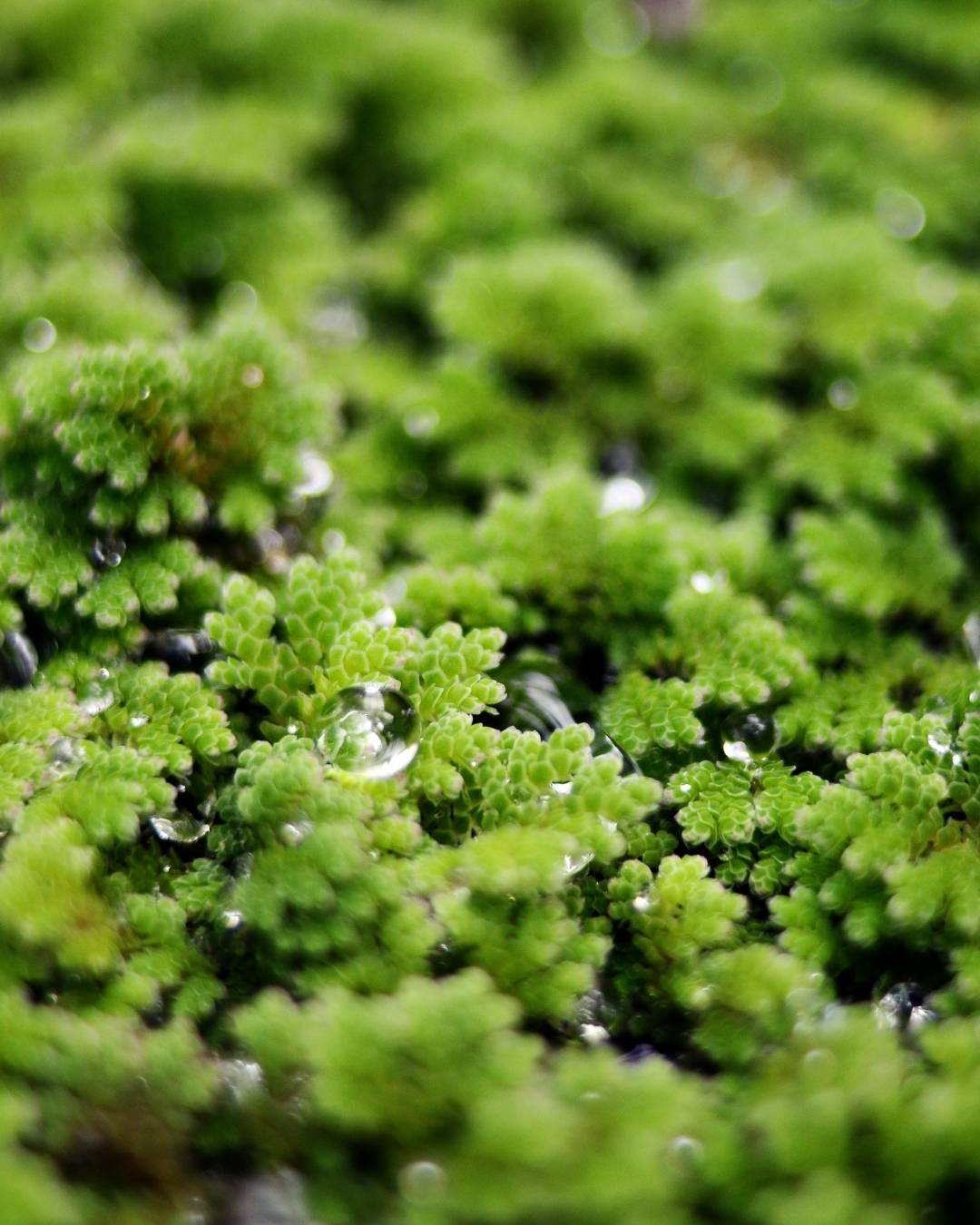
Azolla is a genus of floating freshwater ferns found in warm and temperate regions around the world. Depending on conditions, its leaves can appear bright green, dark green, or rusty red.
The plant is sometimes called mosquito fern, duckweed fern, or water fern. Calling it algae is understandable when you see a pond covered with it, but botanically, that misses the interesting part.
Azolla has roots, stems, and tiny overlapping leaves. More importantly, it carries a microscopic partner within those leaves: a nitrogen-fixing cyanobacterium. This relationship allows the fern to gain usable nitrogen from the atmosphere rather than relying entirely on nitrogen already dissolved in the water or soil.
Think of it as a tiny floating fertilizer factory.
Atmospheric nitrogen is abundant, but most plants can’t use nitrogen gas directly. It has to be converted into biologically useful compounds first. Azolla’s microbial partner helps do that job.
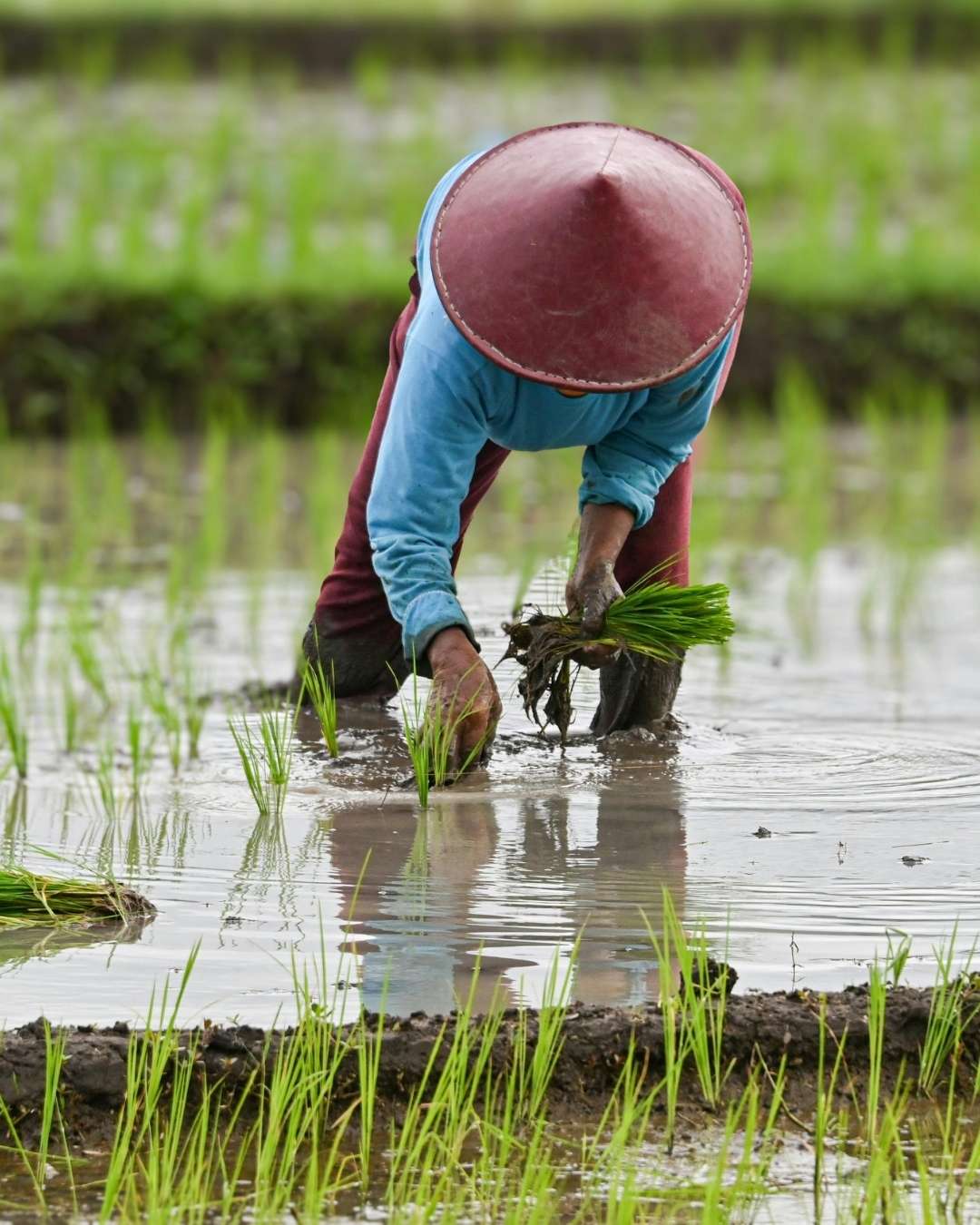
Farmers figured out the practical value of this relationship long before anyone knew what cyanobacteria were. Azolla has a long history of use in Asian rice farming, where it can grow alongside rice and later become organic matter and a source of nutrients.
What’s old, as so often happens in science, has suddenly become interesting again.
This little fern has a remarkable carbon habit
Like other photosynthetic organisms, Azolla takes carbon dioxide from the atmosphere and uses sunlight to turn it into plant tissue.
That alone doesn’t make it a climate solution. Every tree, blade of grass, and head of lettuce performs some version of the same trick. The key question is what happens to the carbon afterward.
If plant material decomposes rapidly, much of its carbon eventually returns to the atmosphere. For meaningful carbon storage, some of that captured carbon needs to remain locked away for longer periods.
This is where scientists are experimenting with several possibilities.
Azolla biomass can be incorporated into agricultural soils, composted, or potentially converted into biochar, a carbon-rich material produced by heating biomass under low-oxygen conditions. A recent scientific review of Azolla’s role in sustainable farming notes its potential for both direct carbon capture and conversion into products such as biochar and biofertilizer.
The idea is appealing. Grow something quickly, let photosynthesis collect atmospheric carbon, then move part of that carbon into a more stable reservoir.
But there’s a catch, and it matters.
Growing biomass is not automatically the same as removing carbon dioxide from the atmosphere for decades or centuries. Scientists have to consider the full carbon balance: cultivation, harvesting, transport, processing, decomposition, methane production, and the fate of carbon in the soil.
That accounting can turn an exciting headline into a rather complicated spreadsheet.
Still, Azolla has another climate trick that may be more immediately useful.
Rice fields are where things get especially interesting
Rice feeds billions of people, but conventional flooded rice farming has a greenhouse gas problem.
When soil remains underwater, oxygen becomes scarce. Microorganisms known as methanogens thrive under these oxygen-poor conditions and produce methane as they break down organic material.
Methane doesn’t linger in the atmosphere for as long as carbon dioxide, but while it is there, it is a powerful greenhouse gas. Reducing methane emissions can therefore make a meaningful contribution to slowing warming.
Enter Azolla.
When the fern grows on the surface of flooded rice paddies, it changes conditions in and around the water and soil. Researchers have found that growing rice and Azolla together can influence oxygen levels, soil chemistry, and the microbial communities involved in methane production and consumption.
A field study in China, for example, found that cultivating Azolla alongside rice suppressed methane emissions. Researchers linked the effect to changes including higher dissolved oxygen at the soil-water interface, altered redox conditions, more methane-consuming microorganisms, and fewer methane-producing archaea.
In plain English, Azolla can make a rice paddy a less hospitable environment for some of the microbes responsible for producing methane.
New research suggests the effect is measurable
More recent work has strengthened the case for pairing Azolla with rice.
A 2025 study examined rice and Azolla grown together under different irrigation conditions. The researchers reported reductions in methane emissions ranging from about 2.9% to 13.2%. Nitrous oxide emissions also fell by roughly 1.7% to 8.6%, though the effect varied.
Here’s the part farmers may care about even more: rice yields increased by roughly 6.2% to 8.3% in the experiments.
That combination matters.
Climate-friendly farming techniques face a practical hurdle. Farmers have to make a living, and the world still needs enormous quantities of food. A method that cuts emissions but causes crop yields to collapse isn’t much of a solution.
Azolla may offer a rare double benefit. Under the right conditions, it can help reduce greenhouse gas emissions while supporting, or even improving, rice production.
Earlier experiments have found similar advantages. A two-year study of flooded rice found that treatments with Azolla could reduce the amount of synthetic nitrogen fertilizer required while maintaining high yields. One treatment combining Azolla and blue-green algae also reduced cumulative methane emissions by 13.2% compared with the study’s conventional fertilizer treatment.
The numbers differ between studies because farms differ. Soil, temperature, water depth, fertilizer use, microbial communities, rice variety, and farming practices all matter.
There’s also the fertilizer question
Nitrogen fertilizer helped revolutionize agriculture, but making and using it comes with environmental costs.
Producing synthetic nitrogen fertilizer requires substantial energy. Once fertilizer reaches a field, some nitrogen feeds crops, while some can escape into waterways or the atmosphere. Nitrous oxide produced by agricultural soils is a particularly potent greenhouse gas.
Azolla offers another route.
Because of its partnership with nitrogen-fixing cyanobacteria, it can add biologically available nitrogen to agricultural systems. Farmers can grow it with rice, incorporate it into soil as green manure, or use processed Azolla biomass as an organic input.
That doesn’t mean synthetic fertilizer can simply disappear tomorrow. Nutrient requirements vary enormously between crops and regions. But even partial replacement can be valuable.
Research in irrigated rice has shown that an Azolla treatment produced high yields while using 25% less urea nitrogen than a conventional fertilizer treatment.
So the climate value of Azolla may come from several directions at once: capturing carbon while it grows, affecting methane-producing microbes, contributing nitrogen, reducing some fertilizer demand, and adding organic matter to soils.
It’s less like a single climate gadget and more like a biological multitool.

Soil might be part of the story, too
Healthy soil contains a staggering amount of carbon.
Some of it comes from roots, some from decaying plants, and some from the countless organisms living underground. Agricultural management can determine whether soils lose carbon or accumulate more of it.
Researchers have therefore tested Azolla compost as a soil amendment.
One study comparing several organic inputs in rice systems found that Azolla compost increased soil carbon storage relative to some other treatments. Another experiment found that combining Azolla compost with conventional fertilizer increased soil carbon storage and crop yield, although that particular treatment also increased methane emissions compared with fertilizer alone.
That apparent contradiction is worth lingering over.
Azolla growing alive on the surface of a rice paddy can behave differently from Azolla biomass mixed into wet soil. Once organic matter is buried in oxygen-poor mud, microbes may feast on it and produce methane.
So scientists can’t simply ask, “Does Azolla work?”
They have to ask: Which species? Grown where? Used alive or composted? Under what water conditions? Combined with which fertilizer? What happens to the biomass afterward?
Those questions aren’t annoying technicalities. They determine whether the climate benefit is real.
Then there’s Azolla’s rather wild geological past
Azolla becomes even more intriguing when you look far back into Earth’s history.
Roughly 49 million years ago, during the Eocene, the Arctic was a very different place. The planet was much warmer, and the Arctic Ocean supported ecosystems that would seem startling today.
Geological evidence indicates that enormous blooms of Azolla repeatedly spread across parts of the Arctic Ocean during an interval often called the Azolla event. Large amounts of organic material accumulated and were buried in sediments.
Scientists have investigated whether this extraordinary episode contributed to a long-term drawdown of atmospheric carbon dioxide and the shift toward a cooler global climate.
That doesn’t mean Azolla single-handedly refrigerated the planet. Earth’s climate system involves ocean circulation, tectonics, weathering, orbital changes, carbon cycling, and feedbacks that operate over immense spans of time.
Still, the ancient episode provides a striking natural experiment: under certain environmental conditions, rapidly growing aquatic plants can capture enormous quantities of carbon, and burial can prevent some of that carbon from returning quickly to the atmosphere.
No wonder modern researchers find the fern hard to ignore.
Could we simply grow huge amounts of it?
This is where a promising idea can run headfirst into ecology.
Azolla grows fast. Sometimes very fast.
That is useful if you’re trying to produce biomass, but uncontrolled growth can become a problem. Dense floating mats can block sunlight from entering the water, alter oxygen conditions, interfere with other aquatic plants, and change habitats for fish and invertebrates.
Some Azolla species can also behave as invasive plants outside their native ranges.
So deliberately releasing it into natural lakes, wetlands, or waterways as a carbon-removal scheme would be a very different proposition from carefully managing it in contained agricultural systems.
Then there is the carbon-storage problem again. Suppose a hectare of Azolla captures a large amount of carbon during a growing season. Great. What happens next?
If the fern dies and decomposes, much of that carbon may return to the atmosphere. If decomposition occurs without much oxygen, methane could also be produced. If the biomass is harvested and converted into a stable material such as biochar, more carbon might remain stored, but processing requires equipment and energy.
Every pathway has to be measured from beginning to end.
The most realistic future may be on farms
For now, Azolla’s strongest case may not be as a gigantic stand-alone carbon removal industry.
Its more practical role could be quieter.
Imagine rice-growing regions where farmers maintain Azolla alongside their crops. The fern contributes nitrogen, suppresses weeds in some settings, adds biomass, alters microbial activity, and helps reduce greenhouse gas emissions. Farmers may need less synthetic nitrogen, while researchers fine-tune irrigation to reduce methane further.
This isn’t futuristic machinery. In some respects, it is a modern scientific examination of farming knowledge that has existed for generations.
That matters because climate change won’t be addressed by one spectacular invention. Energy systems need to change. Forests and wetlands need protection. Industrial emissions need to fall, and agriculture needs to become less carbon-intensive, too.
Small improvements multiplied across vast areas can become surprisingly large.
Rice paddies are a good example. A modest percentage reduction in emissions from one field may sound unimpressive. Apply similar reductions across millions of hectares, however, and the arithmetic starts looking much more interesting.