5 Things You Can Do in Your Daily Life to Save Trees
Protecting trees can sound like a job for conservation groups, governments, or scientists working somewhere deep in a rainforest. Those efforts matter enormously, but our everyday habits matter too. The paper we buy, the food we eat, the furniture we bring home, and even what we throw in the recycling bin can affect demand for forests and forest products.
You don’t have to give up books, live without furniture, or start washing and reusing every scrap of paper. A handful of sensible changes can reduce waste and support better forest management without making daily life a chore.
Here are five of the most useful places to start.
1. Use less paper, but be sensible about it
Paper is probably the most obvious connection between everyday life and trees. Not all paper comes directly from freshly cut trees, and responsible forestry can produce wood and paper while maintaining healthy forests. Still, making paper requires raw materials, water, energy, transport, and industrial processing.
So, using less of it makes sense.
Start with the boring stuff. Bills, bank statements, receipts, event tickets, instruction manuals, and newsletters can often be handled digitally. Many banks and utility providers allow customers to switch off paper statements in a few clicks.
Printing habits are another easy target. Before hitting the print button, ask whether you’ll genuinely use the physical copy. If you need it, print on both sides of the sheet. Drafts, notes, shopping lists, and doodles can go on the blank side of previously used paper.
This doesn’t mean paper itself is the enemy. In fact, paper has one major advantage over many materials: it can often be recycled.
Recycling keeps wood fibers in circulation for longer. Those fibers can’t be recycled forever because they become shorter and weaker each time they’re processed, but getting several useful lives from the same material is far better than treating paper as disposable after one use.
When buying notebooks, printer paper, tissues, or other paper goods, look for products made with recycled materials. You may also see certification marks from organizations such as the Forest Stewardship Council (FSC), which indicate that forest-based materials meet specific sourcing standards.
There’s a slightly funny side to all this. We spent years predicting the arrival of the “paperless office,” only to discover that people really, really like printing things. So perfection probably isn’t coming. Better habits, though, are quite achievable.
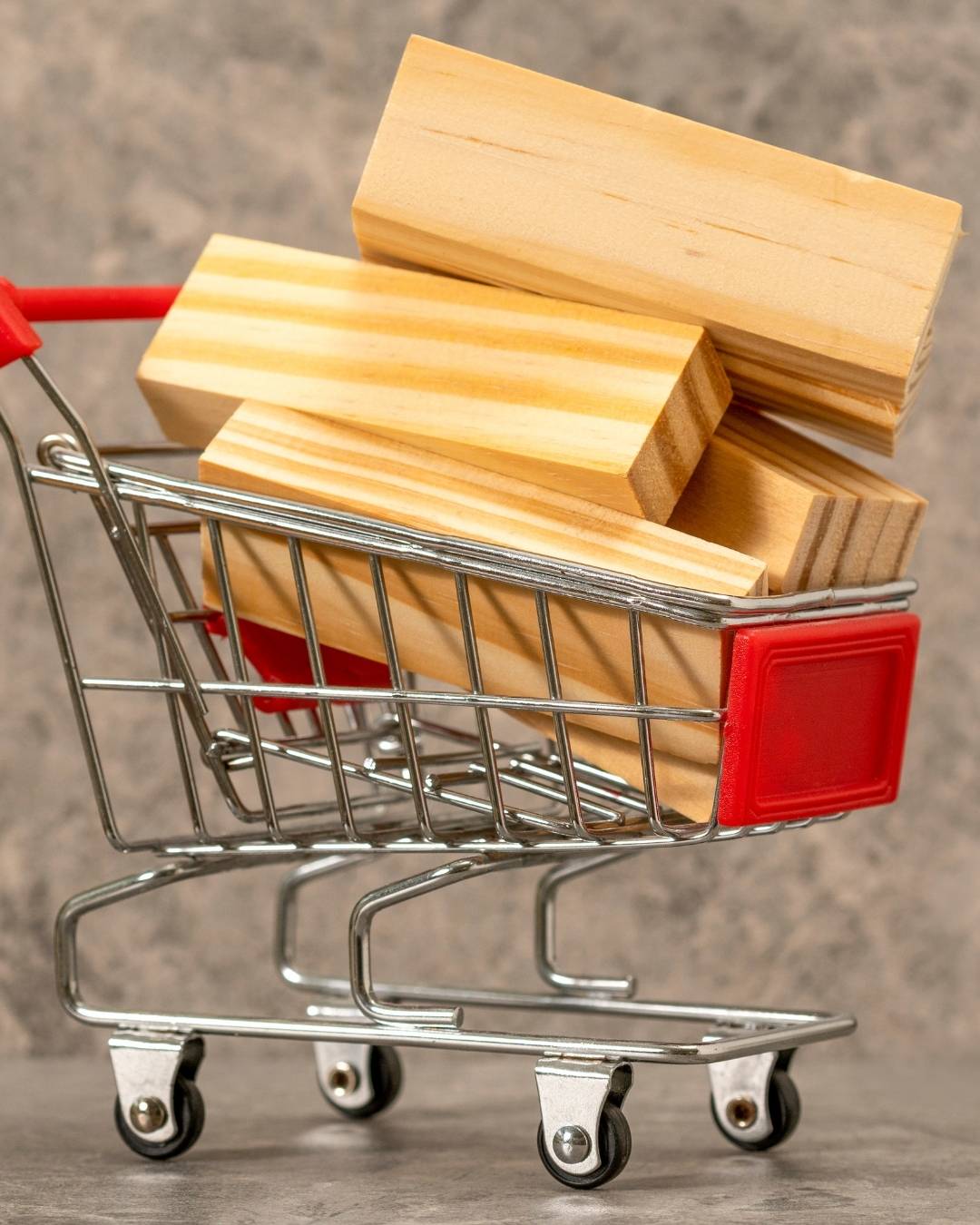
2. Think about the forest hiding in your shopping cart
A tree can enter your home without looking much like a tree.
It might arrive as a dining table, a cardboard box, a roll of kitchen paper, a wooden toy, a picture frame, or a flat-pack bookshelf. Wood and wood fiber are woven through modern life, which means purchasing decisions can have consequences far beyond the checkout.
The useful question isn’t simply, “Does this contain wood?”
It’s, “Where did the wood come from?”
Forests can be managed in ways that allow timber harvesting while protecting ecological functions. Poorly managed or illegal logging is another matter. It can damage wildlife habitat, fragment forests, increase erosion, and open previously remote areas to further development.
When you’re buying wood or paper products, credible certification can help. The FSC label is one of the better-known examples. Depending on where you live, you may also encounter other forestry certification systems.
But labels aren’t the only answer. Buying fewer things and keeping them for longer can be remarkably effective.
A sturdy secondhand wooden desk that lasts another 20 years doesn’t require a new tree to be harvested for your purchase. The same logic applies to shelves, chairs, cabinets, and countless other household objects.
Repair deserves more attention here, too. A scratched table doesn’t automatically need replacing. Sanding, refinishing, tightening a few screws, or replacing a damaged component can turn supposedly worn-out furniture into something that lasts for years.
There’s also character in repaired wood. A tiny dent in an old dining table may be evidence of three family dinners, a birthday party, and somebody getting far too enthusiastic while opening a bottle. New isn’t always better.
So before replacing a wooden item, try a simple sequence: repair it, reuse it, buy secondhand, then buy new if needed.
That little pause can save money as well as materials.
3. Waste less food and rethink what’s on your plate
This connection is less obvious, but it may be one of the most important.
Agriculture is a major driver of land-use change in many parts of the world. Forests may be cleared to create cropland or pasture, while agricultural expansion can also place pressure on nearby ecosystems.
What we eat, therefore, has a land footprint.
That doesn’t mean every meal comes with a neat number showing how many trees were affected. Food systems are much messier than that. Climate, farming methods, geography, supply chains, and local land-use rules all matter.
Still, two everyday habits stand out: reducing food waste and shifting some meals toward foods that generally require less land.
Food waste is particularly frustrating because the resources used to produce that food have already been spent. Land was used. Water was used. Fertilizer may have been applied. Machinery ran. Trucks moved the food. Refrigerators kept it cold.
Then, sometimes, it gets forgotten behind a jar of mustard until it becomes a small biology experiment.
Planning meals can help. So can checking the fridge before shopping, freezing food before it spoils, understanding date labels, and getting comfortable with leftovers.
There’s no shame in Tuesday’s dinner becoming Wednesday’s lunch.
Diet also matters. Livestock production, especially cattle production in some regions, can require substantial amounts of land. Eating more plant-based meals can reduce land demand, particularly when those meals replace foods with a larger land footprint.
You don’t need to adopt an all-or-nothing identity around food. Try beans instead of beef in a chili. Make lentil soup. Order the mushroom dish occasionally. Learn one genuinely good chickpea recipe rather than forcing yourself through something you hate because it seems virtuous.
Changes tend to stick when the food still tastes good.
And there’s a broader lesson here: saving trees isn’t always about the object made from the tree. Sometimes it’s about reducing pressure on the land where trees could otherwise grow.
4. Recycle properly, not hopefully
Recycling seems simple until you stand over three bins holding a greasy takeaway box and questioning every decision that led you there.
Rules vary by location, which is part of the problem. A paper product accepted by one recycling program may not be accepted by another. Some facilities can process certain cartons or coated papers, while others can’t.
That makes one habit especially useful: learn the rules where you live.
Paper and cardboard are valuable recycling materials when they’re clean and accepted by the local system. Flattening cardboard boxes can save space, while keeping paper dry and free from food contamination helps preserve its recycling value.
The bigger issue is “wishcycling.” That’s when people put questionable items into recycling because they hope they’re recyclable.
The intention is good. The result often isn’t.
Incorrect materials can contaminate recycling streams and create extra work at sorting facilities. So if you aren’t sure whether something belongs in the recycling bin, check the guidance from your local council, municipality, or waste provider.
Recycling also works better when we buy products made from recycled materials. Otherwise, we’re collecting material without supporting much demand for what it becomes.
Think of it as a loop rather than a bin.
Paper gets collected, sorted, processed into usable fiber, manufactured into another product, purchased again, and eventually recycled again where possible. Buying recycled paper helps keep that loop moving.
There is an important caveat, though. Recycling shouldn’t become an excuse for endless consumption. A recyclable item still requires resources to manufacture, package, transport, collect, and process.
Using less usually comes first. Reusing comes next. Recycling handles what remains.

5. Help trees grow where you actually live
Reducing demand is important. Protecting and restoring trees locally adds another piece to the puzzle.
If you have suitable land, planting a tree can provide benefits for years or even decades. A well-placed tree may offer shade, create habitat for birds and insects, intercept rainfall, store carbon as it grows, and make a garden or street noticeably more pleasant.
But there’s a catch: planting a tree is the beginning, not the achievement.
Young trees need the right conditions to survive. Species choice matters. Soil matters. Available space matters. Water matters. A tree planted directly beneath power lines, for example, may become a maintenance headache as it matures.
Native species are often worth considering because they can support local ecological relationships. Native insects may depend on certain plants, and those insects, in turn, feed birds and other animals. A tree isn’t an isolated decoration. It can become part of a surprisingly busy neighborhood.
Before planting, check which species suit your climate, soil, rainfall, and available space. Local botanical gardens, universities, conservation groups, and urban forestry departments can be useful sources of advice.
No garden? No problem.
You can volunteer with a local tree-planting or habitat-restoration group. You can support organizations that protect forests. You can also pay attention to proposals involving mature trees in your neighborhood and participate in local consultations when they happen.
And don’t overlook existing trees.
A mature tree already provides habitat and shade that a newly planted sapling may take years to match. Protecting healthy established trees can therefore be just as important as planting new ones.
This is one reason tree-planting campaigns need a bit of nuance. Counting the number of seedlings placed in the ground makes for a satisfying headline, but survival matters more. A million dead seedlings don’t make a forest.
Healthy forests are communities. They contain trees of different ages, understory plants, fungi, microorganisms, insects, birds, mammals, and complex networks in the soil. Restoration is about helping those living systems recover, not merely increasing a tree counter.
Small choices can travel surprisingly far
None of these five actions will save the world’s forests on its own.
That’s worth saying because environmental advice can sometimes make ordinary people feel as though the fate of the Amazon depends on whether they remembered their reusable shopping bag on Thursday.
It doesn’t.
Governments, landowners, farmers, forestry companies, manufacturers, retailers, and conservation organizations make decisions at a scale that individual households simply can’t match. Forest protection needs good policy, responsible land management, law enforcement, scientific research, and long-term conservation.
Yet personal choices still sit inside that larger system.
When millions of people use less paper, waste less food, keep furniture longer, recycle correctly, and choose responsibly sourced products, demand begins to shift. When communities care about their local trees, those trees become harder to ignore in planning decisions. And when consumers understand where products come from, companies have a stronger reason to pay attention to their supply chains.
So start somewhere manageable.
Use both sides of a sheet of paper. Keep that old bookshelf for another few years. Turn tonight’s leftovers into tomorrow’s lunch. Check what actually belongs in your recycling bin. Plant a suitable native tree, or help care for one that’s already standing.
Saving trees doesn’t have to mean living a perfectly “green” life.
More often, it means wasting a little less, asking a few better questions, and remembering that the ordinary things around us came from somewhere. Sometimes, that somewhere was a forest.